
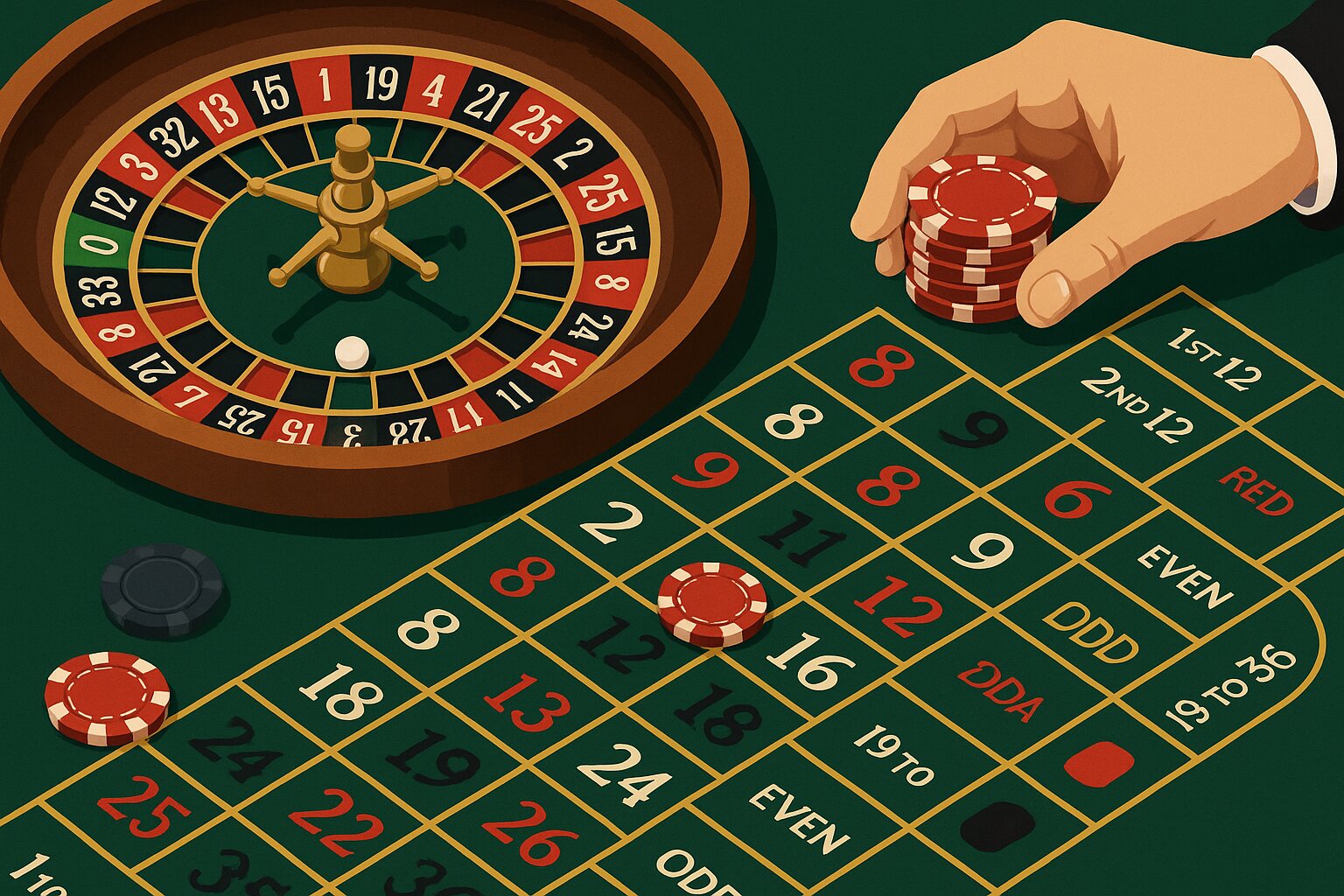
Roulette is one of the most iconic casino games. The wheel, the ball and the table layout combine into a quick, engaging experience that’s easy to learn.
This guide focuses on how to play smarter: clear explanations of the game, ways to manage your money and practical tips that help you enjoy the experience without risking more than you can afford. Read on to learn what matters most at the table.
How Does Roulette Work?
Roulette is played on a numbered wheel with a matching betting layout. Players place chips on the layout to predict where the ball will settle after the wheel is spun. Bets can be on a single number, a group of numbers, colours, or whether the number will be odd or even. Once bets are closed, the dealer spins the wheel one way and the ball the other; the pocket where the ball comes to rest determines the winning bets and the associated payouts.
There are several common rules and bet types to be aware of: inside bets (single numbers or small groups) offer higher payouts but lower probability of success, while outside bets (colours, odd/even, large groups) pay less but cover more outcomes. Different roulette formats change only a few details of the wheel or certain rules, which in turn alter the statistical return on bets.
If you’re new to the game, a short free session on a demo table can help you see how the wheel, bets and payouts fit together before you stake real money.
What Are the Main Types of Roulette?
Roulette appears in a few main versions, each with its own wheel configuration and rule set. The most commonly encountered are:
- European
- French
- American
Each version changes the probabilities and therefore the expected return for the player.
European Roulette
European Roulette uses a wheel with 37 pockets: numbers 1–36 plus a single zero (0). The single zero is the reason payouts are calculated in a way that gives the house a small statistical edge. In plain terms, that extra zero means the odds are slightly worse than the expressed win probability on many bets.
This variant is widely offered in land-based and online casinos and is generally the preferred choice for players seeking a lower house advantage compared with the double-zero game.
French Roulette
French Roulette also uses the single-zero wheel but often adds rules such as La Partage or En Prison. These rules change what happens to even-money bets if the ball lands on zero and can reduce the effective loss on those bets.
Depending on which rule is in play, French Roulette can cut the house edge roughly in half for even-money bets, compared with standard European rules. That makes it attractive for players who focus on those kinds of bets.
American Roulette
American Roulette has 38 pockets, adding a double zero (00) alongside the single zero. That additional pocket alters the probabilities and increases the built-in advantage for the house compared with single-zero variants.
Because of the extra zero, the house edge on standard American wheels is noticeably higher than on European or French wheels, which is why many players prefer single-zero games when given a choice.
Choosing a version is largely a matter of personal preference and an understanding of the mathematical difference between the wheels. Single-zero wheels generally offer a better expected return for the player, while the double-zero wheel increases the house advantage.
House Edge Explained: What Players Need to Know
The house edge describes the statistical advantage the casino has over time. In roulette, this advantage comes from the presence of zero pockets on the wheel and the way payouts are structured relative to the number of possible outcomes.
European and French single-zero wheels typically produce a house edge around 2.7%. The American double-zero wheel raises that edge to about 5.26% because there are more losing pockets relative to the payout schedule. This is a fixed feature of the game: no betting pattern or tactic can remove the edge, though it can influence how quickly your bankroll grows or shrinks.
Understanding the house edge helps you choose which version to play and frame sensible expectations about results over extended play.
Bankroll Management: How to Play Responsibly
Looking after your bankroll is essential for keeping roulette enjoyable. Decide ahead of time how much you will spend in a session and only use funds allocated for entertainment. Breaking a bankroll into smaller units for individual sessions makes it easier to control spending and avoid rapid losses.
Keep bet sizes consistent with your overall budget; smaller, steadier bets extend play and reduce the chance of hitting limits that force large, risky stakes. Taking regular breaks and setting session limits helps maintain perspective during play. Use available account controls—such as deposit or time limits—if you find them helpful for staying within your plan.
If playing stops being enjoyable, stepping away is the right choice.
Is There a Winning Betting System for Roulette?
Many betting systems promise a path to profit, but none can alter the wheel’s probabilities or the house edge. Every spin is an independent event governed by the wheel’s design, so patterns in results do not imply a method to secure long-term advantage.
Some well-known systems aim to manage stakes rather than change outcomes. They can shape how wins and losses feel during a session, but they don’t improve the expected return.
Martingale and Other Popular Systems Debunked
The Martingale system involves doubling a stake after each loss so that a subsequent win would recover earlier losses plus a small profit. In practice, table limits and finite bankrolls mean a long losing sequence can exhaust funds or hit the betting cap before a recovery occurs.
Other systems, like Fibonacci or Labouchère, follow mathematical sequences to alter stakes. They may smooth variance for a time, but their underlying impact on expected results is neutral: they don’t reduce the house edge.
Treat these systems as ways to structure bets, not as methods to overcome the game’s mathematics.
What Are the Most Common Mistakes to Avoid?
Even experienced players can slip into habits that make sessions less enjoyable or more costly. Common mistakes include increasing stakes after a loss in an attempt to recoup money, beginning play without a clear budget, or trusting perceived patterns in previous spins. Each of these can lead to faster losses or poor decision-making.
Playing when tired or distracted also affects judgement and can make it harder to stick to limits. Regular breaks and a planned session size reduce the chance of these errors. If you find patterns influencing your choices, remind yourself that each spin is independent and base decisions on your risk tolerance rather than past outcomes.
How Important Is Table Selection?
Picking the right table affects comfort and how long your play lasts, though it won’t change the statistical edge. Check minimum and maximum bets to ensure they fit your bankroll. Table rules can differ, so look for versions that offer rules you understand and prefer—for example, tables with La Partage or En Prison if you favour even-money bets and single-zero wheels.
Your environment matters too: a table where you feel at ease helps you focus on stakes and limits. Online players should also check for clear rules and a straightforward interface that displays payouts and odds clearly.
Choosing a table that matches your budget and preferred style keeps the experience paced and manageable.
Can Roulette Be Beaten Consistently?
No reliable method exists to beat roulette over the long term. The wheel’s design, the rules and the payout structure combine to give the house a consistent statistical advantage. While individual sessions may produce wins, those short-term results do not alter the mathematical expectation that favours the casino.
The game is driven by randomness and variance, so streaks of good or bad luck are normal. Over many spins the expected return converges to the theoretical value determined by the house edge, meaning any system that claims to guarantee profit is fundamentally flawed.
Approach the game with realistic aims. Consider:
- playing for entertainment rather than as a source of income
- setting and sticking to a budget and session limits to pace your play
This mindset lowers the temptation to chase losses and helps you keep control during both winning and losing stretches. If gambling stops being fun or you find it hard to stay within limits, seek help from reputable support services.
FAQs: Answers to Common Player Questions
Roulette raises a few regular queries, and clear answers help set expectations.
Is roulette a game of skill or chance?
Roulette is driven by randomness: outcomes are independent and cannot be predicted in advance.
Can I play roulette if I’m under 18?
No. You must be at least 18 to participate in roulette in the UK.
Are online roulette games fair?
Reputable operators use certified random number generators for online tables, and independent audits verify fairness. Check that the operator is regulated and publishes certification details before you play.
What’s the safest way to enjoy roulette?
Decide your spending limit in advance, keep bets within that plan and take regular breaks. Use account controls if available, and step away if you no longer find the experience enjoyable.
Are there free versions of roulette?
Yes. Many sites and venues offer free or demo roulette to learn the rules and explore different bet types without financial risk.
If anything in this guide leaves you uncertain, seek information from regulated operators or independent sources and use the safety tools they provide.
**The information provided in this blog is intended for educational purposes and should not be construed as betting advice or a guarantee of success. Always gamble responsibly.