
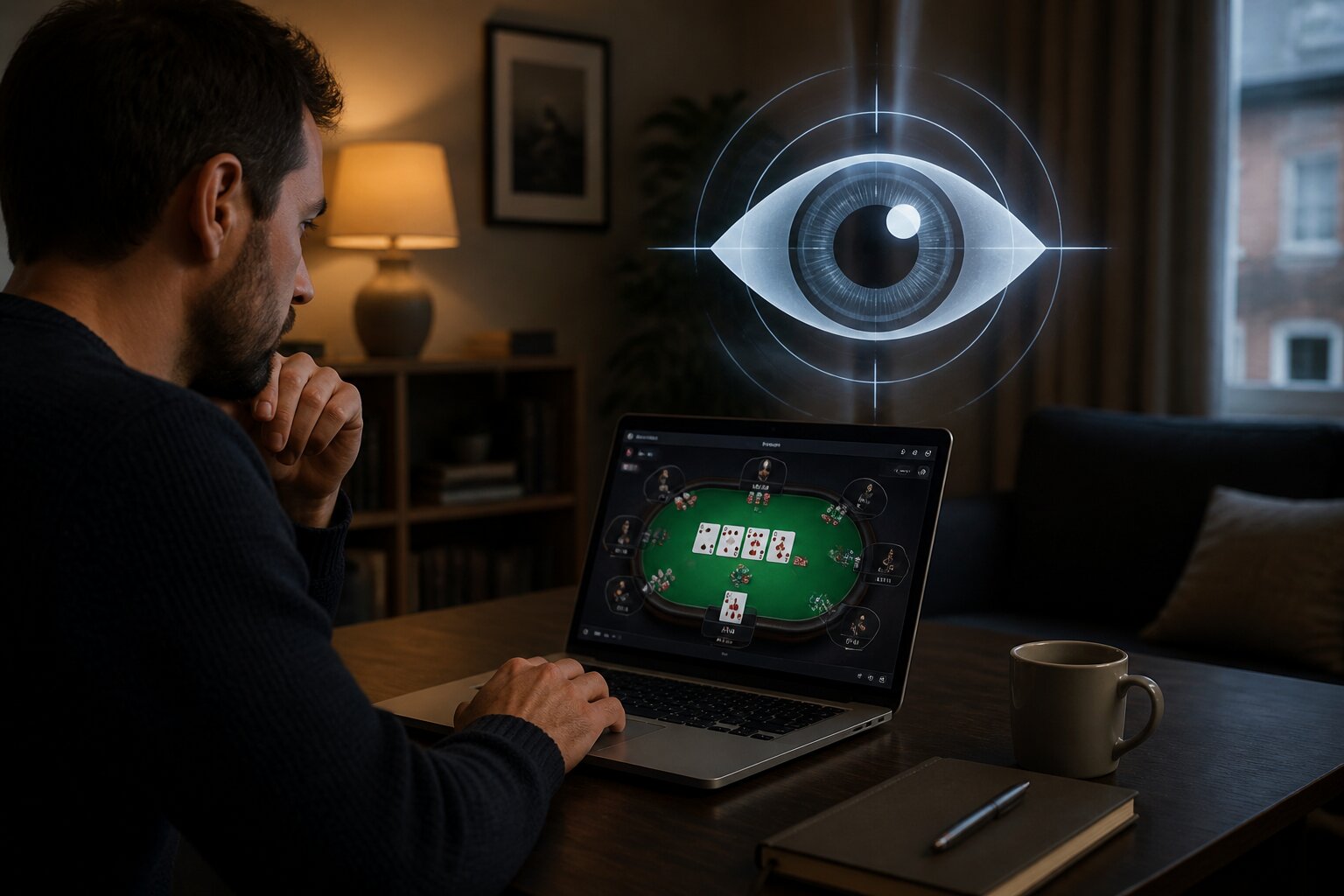
Ever wondered if online poker sites can spy on your computer screen? You’re not alone. With so many rumours and stories going around, it’s natural to feel uneasy before you play.
You might have heard that sites can see your cards, track your web browsing, or monitor things outside the game. It sounds worrying—but separating fact from fiction makes it easier to know what to watch for.
Read on to uncover the truth and learn how to keep your account and device secure when you play.
How Do Online Poker Sites Monitor Players?
Online poker platforms monitor games primarily to keep play fair and to protect players. Each action at the table, such as a bet, fold or chat message, is recorded in detailed game logs. These logs allow operators to review hands and investigate any unusual patterns.
Anti-cheating systems analyse those logs and other available data. They look for patterns that may suggest collusion, the use of banned software, or multiple accounts being used to gain an unfair advantage. This is about spotting behaviour, not about viewing anything on your screen.
Fraud detection and account-monitoring tools also examine things like transaction history and device identifiers to identify suspicious activity. Where an investigation is needed, operators use the evidence from logs and transactional records rather than trying to access a player’s personal files or apps.
All of this activity is driven by the need to protect the integrity of the games and the people playing them. Monitoring aims to detect and deter cheating, fraud and breaches of site rules rather than to invade personal privacy.
Is Screen Sharing or Remote Access Possible When Playing Poker Online?
Poker sites do not have the ability to view your screen or remotely control your device while you play. The software used by reputable operators is focused on the game client and the data the client sends to the server, such as bets and chat.
If a site were to deploy screen-viewing tools or remote-access software, it would breach legal and regulatory standards and expose the operator to serious penalties. For that reason, licensed operators do not use these intrusive methods.
That said, players should be cautious about third-party applications. Screen sharing or remote access can be introduced by software installed on your device that is unrelated to the poker platform. Keeping your device free of unknown or suspicious programmes is a straightforward way to avoid this risk.
Understanding Online Poker Security & Privacy
Playing online should feel secure, and good operators publish clear information about how they protect players. Encryption is used to safeguard the transmission of personal details, account information and financial transactions, so those items are not exposed while you play.
Operators are also required to follow data protection laws and to keep personal information only as long as necessary for legitimate business purposes. That means account data and transaction records are stored under controls designed to limit access and prevent misuse.
Transparency is important. Reputable platforms provide privacy policies that explain what data they collect, how it is used, and the circumstances in which it may be shared, for example, to investigate suspected fraud. Reviewing that policy gives a clear picture of how your information is handled.
Dispelling Myths: What Poker Sites Can and Cannot See
There are a lot of myths about what platforms can access. In reality, sites can see information connected to your account and your activity within their software: items such as your account details, the hands you play, chat logs, and your deposits and withdrawals.
They do not have any direct line into the rest of your device. Applications, emails, browser tabs, personal photos and files are outside their reach unless you have installed software that intentionally shares that information. Claims that operators can view everything on your screen are unfounded.
Keeping these limits in mind helps separate genuine security issues from sensational stories. Concerns to take seriously are things like suspicious account activity, requests to share login details, or any software on your device that you do not recognise.
Playing Poker Online Without Download: Is It Safe?
Browser-based poker is a convenient option and, when provided by a reputable operator, it can be just as secure as a downloaded client. The same encryption and server-side checks protect account information and game activity whether you use an app or a browser.
Browser play removes the need to install additional software, which can reduce one potential vector for unwanted programmes. However, the browser itself should be kept up to date, and any browser extensions should be reviewed to ensure they come from trusted developers.
Simple precautions make a difference. Use a current browser, keep your operating system patched, and avoid playing on unknown public Wi-Fi networks without protection. Those habits reduce the chance that unrelated software or network issues could compromise your device.
Tips for Protecting Your Privacy When Playing Online Poker
Keeping your account and device secure involves straightforward habits that fit easily into how you already use the internet.
Use secure networks. Prefer private Wi-Fi or a secured wired connection and avoid untrusted public hotspots. If you must use a public network, consider a reliable VPN to protect your connection.
Keep login details private. Create strong, unique passwords and do not share your account with others. Where available, activate two-factor authentication for an extra layer of security.
Manage your device. Run regular software updates, use reputable antivirus protection, and uninstall programmes you do not recognise. Periodically review browser extensions and background applications to spot anything unfamiliar.
Follow verification and safety steps on your account. Complete identity checks and set sensible account limits as provided by the platform; these measures help protect your account and other players.
Applying these measures gives you better control over your privacy and reduces the chance that external factors will affect your poker experience.
**The information provided in this blog is intended for educational purposes and should not be construed as betting advice or a guarantee of success. Always gamble responsibly.