
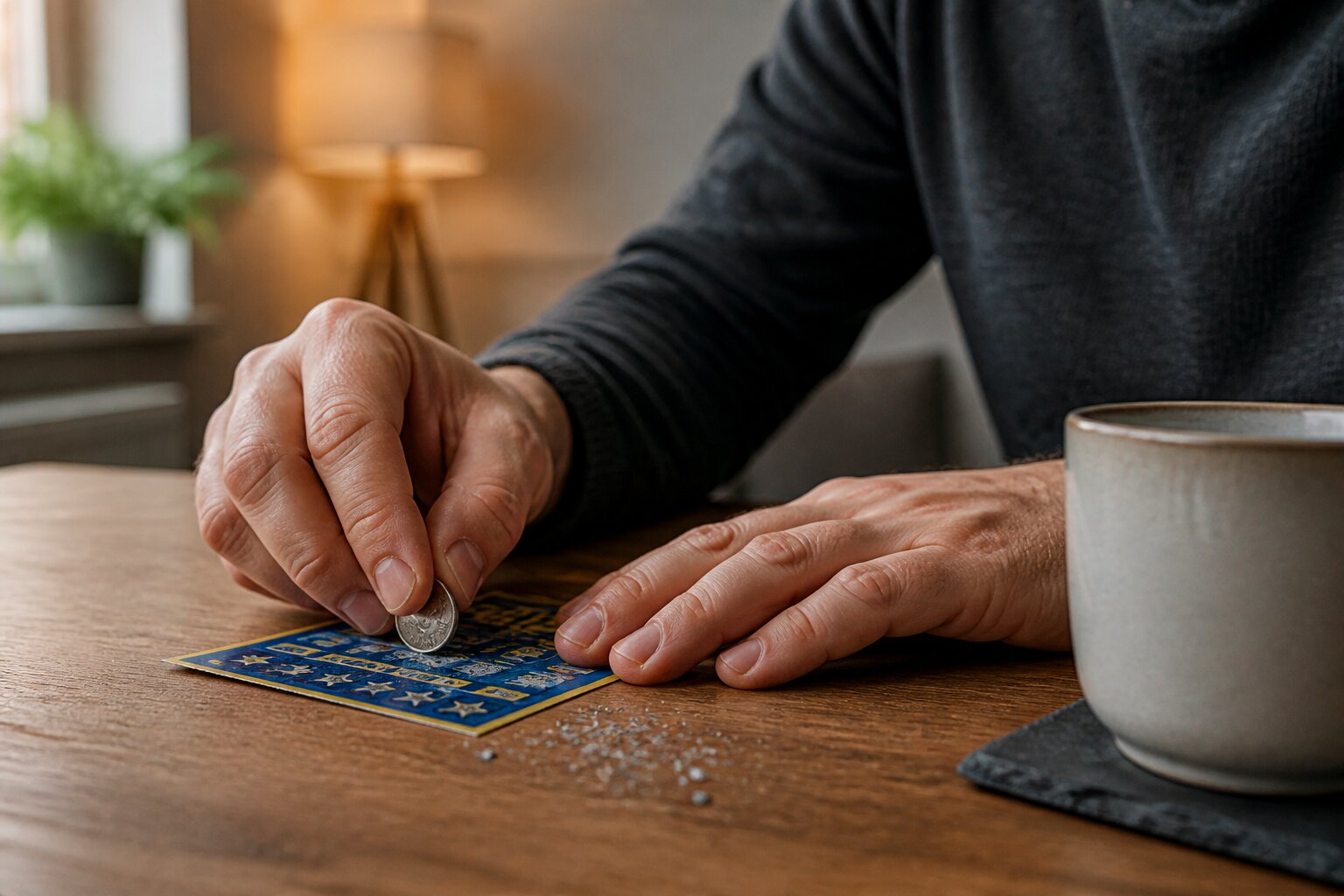
Scratch cards are designed around a simple proposition: pay for a card, reveal the symbols and find out whether you have won. But how often do those cards deliver the biggest prizes, and what do the odds actually tell you?
Stories of substantial scratch-card wins can attract attention, particularly when a top prize is involved. However, individual wins only tell part of the story. This article takes a closer look at how scratch cards work, how their odds are presented, and what reported large wins can—and cannot—tell you.
Read on to explore the numbers behind scratch cards and put the biggest wins into perspective, with information relevant to the UKGC-regulated gambling market.
What Are Scratch Cards & How Do They Work?
Scratch cards are straightforward instant-win games: you buy a card and remove a coating to reveal symbols or numbers that determine whether you’ve won a prize. Prizes range from small sums up to very large jackpots, depending on the game.
They’re sold in shops and online, with prices typically from £1 to £5 and some special editions costing more. Each card’s outcome is determined at the moment of issue by a controlled process — either a secure electronic system for online games or a regulated printing and distribution method for physical cards.
There’s no skill involved in choosing a card. Results are set up to be unpredictable and fair, and payouts for physical cards are handled immediately at the point of sale while online wins are credited to an account straight away. Knowing how the result is produced helps set realistic expectations about what you’re actually buying: a chance at a prize rather than a guaranteed return.
What Are the Odds of Winning on Scratch Cards?
Each scratch card carries its own set of odds, usually printed on the back or shown in the game details online. These odds tell you how frequently prizes appear across all the cards produced for that game.
Commonly, the odds of winning any prize on UK scratch cards fall in the region of 1 in 3 to 1 in 5. That includes small prizes such as a free ticket. By contrast, the odds for the top prizes are far longer — sometimes in the millions to one — and vary by game and price point.
Return to Player (RTP) is another helpful figure. An RTP of 60–75% means that, across all sales for that game, 60–75p of every £1 is paid back in prizes over time. RTP doesn’t predict an individual player’s outcome, but it does give an overview of how prize money is distributed across the whole run of a game.
How Do Different Scratch Cards Compare for Payouts?
Scratch cards differ in price, prize tiers and the distribution of those prizes. Generally, higher-priced cards offer larger top prizes and often a better overall prize distribution.
Lower-cost cards (£1) typically have smaller top prizes and more modest prize tiers. Mid-range cards (£2–£5) tend to offer higher RTPs and larger headline prizes; the very priciest editions can carry seven-figure top prizes. Online scratch cards mirror these patterns and display odds and prize breakdowns before you play.
The prize pool for a game is funded by ticket sales, so only a portion of cards carry significant amounts. That’s why most wins are smaller; the biggest amounts are intentionally rare and tightly controlled. Checking the published odds and prize list for each specific card helps you understand whether the game’s structure matches your expectations.
Do Big Wins on Scratch Cards Really Happen?
Large payouts do occur, but they are rare. Publicised wins make headlines precisely because they are uncommon. When a top prize is paid, it’s the result of the fixed prize distribution that was set when the game was produced.
Those headline stories usually represent a tiny fraction of all tickets sold. For every high-value win reported, many more tickets deliver small amounts or nothing at all. That imbalance is a deliberate part of the way these games are structured: most of the prize budget is allocated to many modest prizes, with a small portion reserved for the largest awards.
Understanding this helps place single big wins in context: they are genuine but exceptional instances in a much larger sample of outcomes.
Real Stories: UK Scratch Card Winners
Below are a few verified instances of substantial wins in recent years, showing how rare but real big prizes can be.
- Sue Davies from Wales won £1 million in 2022 after purchasing a scratch card at her local shop. The reported odds for that particular top prize were around 1 in 3 million.
- Tracy Wilmot from Hertfordshire won £1 million in 2023 after buying a £5 scratch card; the operator confirmed the prize.
- Tom Naylor from Nottinghamshire won £250,000 from a £2 scratch card in 2021, another example of a significant but uncommon payout.
These examples demonstrate that while top prizes do exist and are paid, they are exceptional compared with the volume of tickets sold. If you’re curious about current prize levels and remaining top prizes for a particular game, check the game details where those figures are published.
Is It All Pure Chance or Are There Patterns?
Scratch card outcomes are designed to be random and independent. Cards are produced and distributed so that no one card should be predictable based on where or when it was bought.
A regulated production process and randomness checks ensure that individual cards cannot be identified as winners before they are revealed. Claims that certain shops or times of day yield more winners do not hold up against how the games are manufactured and sold.
What this means is straightforward: there’s no reliable system or set of observable signs that will indicate a winning ticket in advance. Each card represents an independent chance determined by the game’s overall prize structure.
Common Myths About Scratch Card Wins
Several persistent myths circulate about scratch cards. Here are some of the most common, and what the facts show.
- Shops “saving” winners or certain locations being better is a misconception. Cards are distributed widely and without a predictable concentration of prizes.
- You can’t tell a winner by the look or feel of the card. Physical characteristics are standardised and the outcome is concealed beneath the scratch panel.
- Buying multiple tickets increases chances of any win only in the simple sense that more tickets equal more opportunities; it does not change the odds of each individual card’s top prize.
- Losing streaks do not increase the chance of a future win; independence of outcomes means past cards don’t influence future ones.
These points reinforce the same conclusion: no visible indicator or shopping tactic alters the fundamental odds built into the game.
What Happens After You Win Big on a Scratch Card?
When a sizeable prize is won, there is a clear process to confirm and pay the winner. Large prizes typically have to be claimed through the operator rather than at the point of sale.
Claiming involves keeping the winning card secure and contacting the operator to begin the verification. Identification and proof of age and address are standard parts of the claim process; they help prevent fraud and ensure the prize goes to the rightful recipient. Once verified, payouts are generally made by bank transfer and formal paperwork completes the process.
Winners are often advised to seek independent financial and legal advice before making major decisions. This helps with tax considerations, long-term planning and protecting the funds. The procedures are in place to ensure the outcome is fair and the payment is handled securely.
Are Scratch Cards Worth Playing in the UK?
Whether scratch cards are worth it depends on what you want from them. If you enjoy the short burst of anticipation and treat the cost as entertainment, they can provide that experience. If you are seeking reliable financial returns, they are not a suitable choice.
Most players will win small amounts or nothing, and the odds of a major prize are very long. Being informed about the odds for a particular game, and setting a personal spending limit, helps keep play within whatever entertainment budget you’ve set.
If play stops being enjoyable, or if you find yourself chasing bigger wins, it’s sensible to pause and reassess. There are tools and services that make it straightforward to limit spending and control access to games.
Responsible Play & Where to Get Support
Playing should remain an enjoyable activity. If you find it isn’t, or you’re concerned about someone else, support is available.
Most licensed operators provide options to restrict access, such as time-outs, spending limits and self-exclusion. These tools help people manage their play without needing to stop abruptly.
If you need independent advice or counselling, organisations such as GamCare and BeGambleAware offer confidential support and practical tools. Reaching out early for guidance can make a real difference.
**The information provided in this blog is intended for educational purposes and should not be construed as betting advice or a guarantee of success. Always gamble responsibly.