
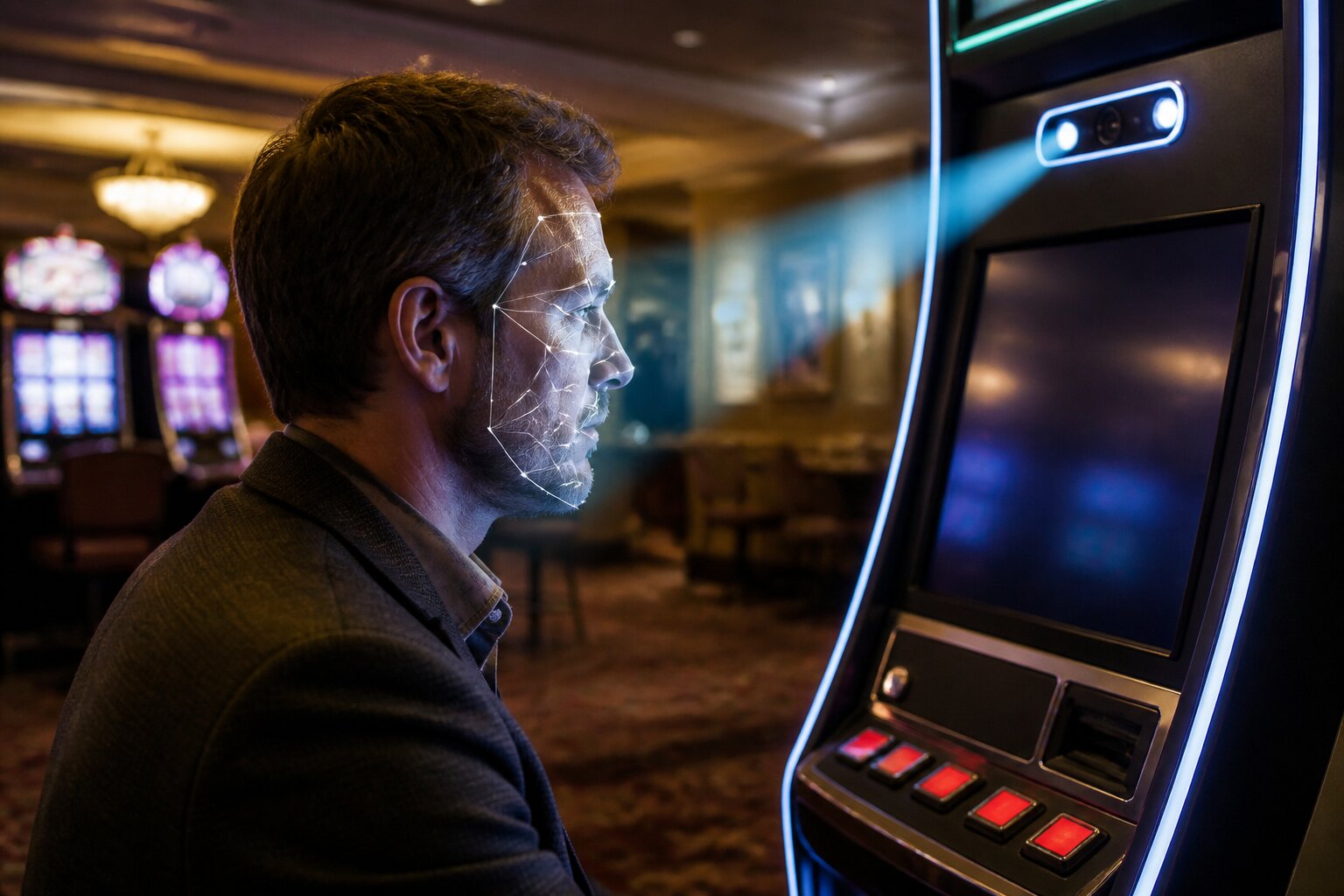
Slot machines have always carried an air of intrigue, and it’s easy to wonder how much tech sits behind those spinning reels. Rumours about facial recognition and AI in casinos have been around for years, so it’s worth separating fact from fiction.
This article explains what systems casinos actually use to protect guests and property, how personal data is treated, and what you can expect now and in the future. If you’ve been curious about casino security, read on — the realities are both more mundane and more reassuring than you might think.
How Do Casinos Monitor Slot Machines?
Casinos monitor slot machines to make sure games run correctly, payouts are accurate and machines are not tampered with. Most machines connect to a central system that records performance metrics such as payouts, coin or credit levels, error codes and maintenance alerts. That lets staff identify faults quickly and fix problems before they affect players.
Staff also carry out routine physical inspections to confirm cabinets are secure and internal components are intact. CCTV covers public areas mainly to deter crime and to provide evidence if an incident occurs; it is not involved in determining game outcomes.
Regulation ensures game fairness, so surveillance and monitoring are about safety and compliance rather than influencing play. If you ever have questions about monitoring practices, casino staff can explain what systems are in use and why.
Facial Recognition Technology in Casinos: What Is It?
Facial recognition is software that analyses facial features to match an image against a database. In some countries and some venues it is used to identify known persons of interest, such as individuals who have been excluded from the premises or who present a security risk.
Where it is deployed, the technology tends to be positioned in entrances or other general surveillance locations, not built into slot machines. Its purpose is venue security: to support staff in identifying people who should not be on-site or who may require intervention.
In the UK this kind of technology is tightly regulated and must meet legal standards for data protection and proportionality. When facial recognition is used, venues are expected to be transparent about why they process images, who can access them and how long they are retained.
If you want details about a specific casino’s use of such systems, asking for their privacy policy will tell you what data is collected and how it is handled.
Is Facial Recognition on Slot Machines a Privacy Concern?
Concerns about privacy are understandable whenever biometric systems are involved. In the UK, facial recognition is not used to monitor play at individual slot machines. When the technology is present, it is intended for venue-level security tasks rather than tracking wagering behaviour.
Legal protections require casinos to justify any processing of images, limit access to authorised personnel and retain data only for a necessary period. These safeguards reduce the risk of misuse and give patrons a right to information about how their data is handled.
How Do Casinos Protect Customer Data?
Casinos must comply with data protection law, which means any images or personal data collected through CCTV or facial recognition have to be processed lawfully and stored securely. Access is restricted, and records are only kept for as long as there is a legitimate need.
Venues are required to set out their data practices in a privacy policy and to operate transparently. If you have questions about how long images are kept or who can view them, the policy will usually explain that or staff can provide further clarification.
Are Casinos Allowed to Use Facial Recognition in the UK?
Use of facial recognition in the UK is permitted but subject to stringent controls. Operators must demonstrate a lawful basis for processing personal data and ensure systems comply with both gambling regulation and data protection requirements.
Those controls typically include:
- carrying out a Data Protection Impact Assessment and recording the reasons why the technology is necessary and proportionate
- following guidance from the Information Commissioner’s Office and maintaining appropriate technical and organisational measures
- meeting Gambling Commission expectations on player protection, anti-money laundering and excluding barred individuals
Most deployments focus on preventing crime, supporting self-exclusion schemes and restricting access to excluded individuals. Typical uses include:
- identifying persons on exclusion lists or those with self-exclusion agreements
- assisting with investigations into criminal activity or suspicious behaviour
- helping enforce age restrictions and identity checks
Any deployment must be proportionate, with clear signage and governance, and it must not be used to interfere with the integrity of gaming outcomes. In practice this means operators should:
- limit the scope and retention of biometric data to what is strictly necessary
- provide visible notices so customers are aware of the technology and their rights
- implement robust governance, audit trails and regular reviews of effectiveness and impact
Regulation aims to balance safety and privacy, so new technologies are assessed carefully before they are adopted in a casino environment. Operators should be able to demonstrate ongoing compliance and be prepared to cease or adjust use if risks to privacy or fairness arise.
Common Myths About Casino Security Systems
There are several persistent myths about casino technology that are worth dispelling. One false idea is that surveillance systems can change the result of a slot game. Outcomes are controlled by certified game software and independent testing, not by cameras or monitoring systems.
Another misconception is that facial recognition is routinely used to log individual betting habits. In the UK, using biometric systems for that purpose would require a clear legal basis and strict safeguards, so it is not a standard practice.
People sometimes assume security teams are watching every player’s every move. In reality, surveillance focuses on detecting fraud, theft and safety risks, and it supports staff interventions when necessary rather than micromanaging play.
If anything about a venue’s security feels unclear, staff can usually explain the measures in place and the reasons behind them.
What Other Security Measures Do Casinos Use?
Alongside cameras and central monitoring, casinos combine physical security and staff training to maintain a safe environment. Trained security personnel patrol and monitor public areas, often in plain clothes as well as uniform, and intervene discreetly when incidents occur to avoid disturbing other customers.
Staff receive ongoing training in recognising signs of prohibited activity, enforcing age checks and applying exclusion rules. Training typically covers conflict de-escalation, identification checks, spotting problem gambling behaviours and the correct steps for reporting concerns to management or regulators.
Access to restricted areas is tightly controlled. Measures commonly include electronic keycards, coded locks, visitor logs and escorted access for contractors. Physical barriers and clear signage also help keep sensitive zones such as gaming floors, cash offices and server rooms secure.
Cash handling follows strict procedures to limit risk. These procedures often include dual control for large transactions, sealed transport between tills and cash offices, regular reconciliations, and CCTV coverage of counting rooms. Staff rotations and surprise audits reduce the chance of internal fraud.
Casinos also work with external partners to bolster security, including local police, licensing authorities and specialised forensic teams when required. Regular compliance checks and independent audits ensure processes meet legal and licensing standards.
Together, these measures help deliver several important outcomes:
- protect customers and staff from harm and criminal activity
- maintain fair play and integrity on gaming machines and tables
- ensure regulatory obligations and licensing conditions are met
As technology evolves, training and procedures evolve with it so staff remain able to respond effectively to new challenges. Periodic reviews of systems, updates to software and refresher training for personnel keep security practices current and proportionate to emerging risks.
The Future of Casino Security: What to Expect
Security technology will continue to develop, but any new tools will be evaluated against privacy standards and regulatory requirements. Improvements are likely to focus on making venues safer while preserving patrons’ rights and dignity.
Future developments may include more sophisticated analytics to spot suspicious patterns at scale and better systems to help staff identify and support vulnerable individuals earlier. Any deployment will need strong governance, clear policies and visible explanations so patrons understand how their data is handled.
In short, advancement is expected, but change will be cautious and regulated to protect players’ privacy and ensure fair, secure gaming for everyone.
This overview shows that modern casino security is a mix of technology, trained staff and clear rules designed to protect people and games alike, while keeping personal data secure and used only for legitimate safety and compliance purposes.
**The information provided in this blog is intended for educational purposes and should not be construed as betting advice or a guarantee of success. Always gamble responsibly.