
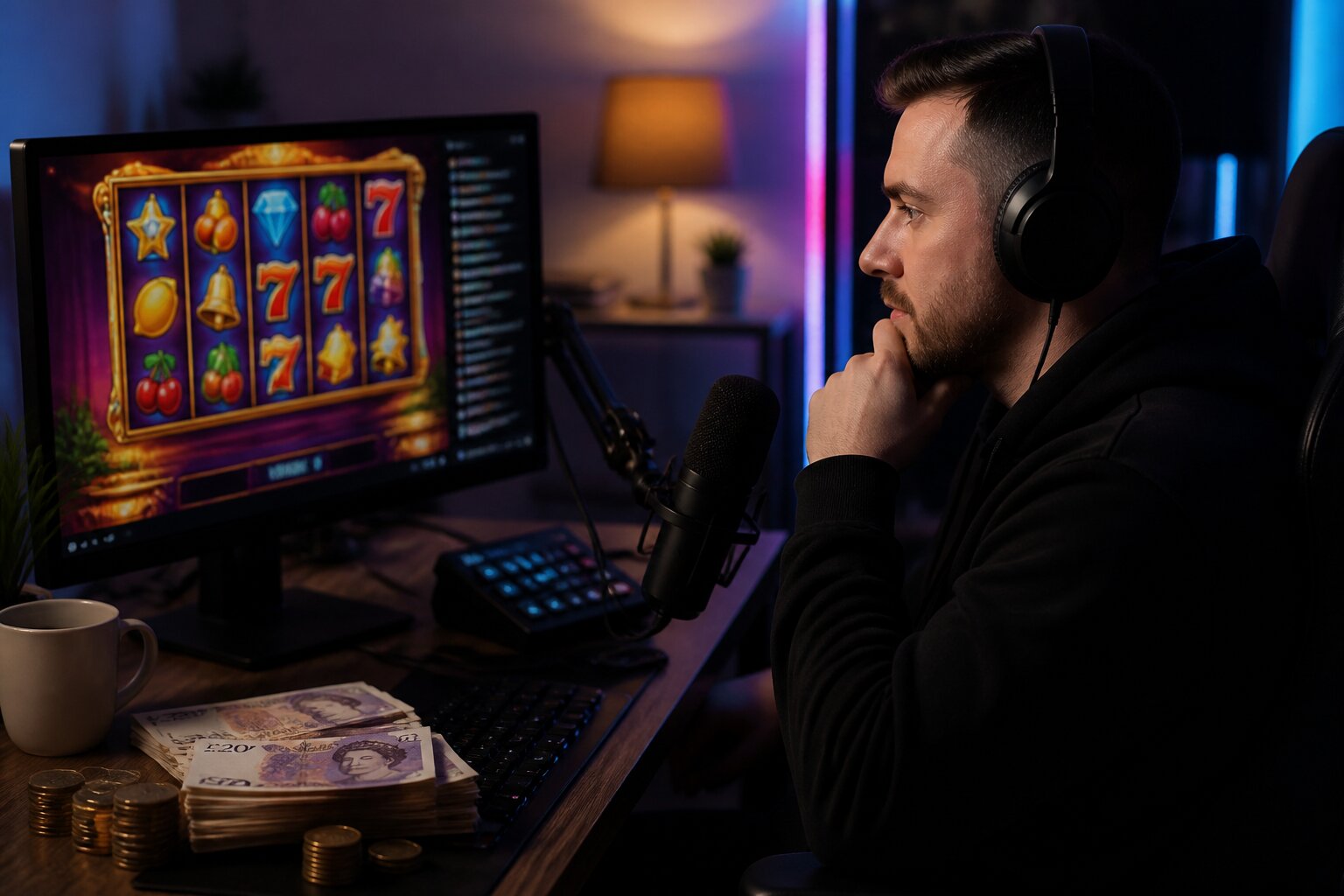
Have you ever watched someone spinning the reels on YouTube or Twitch and wondered if it’s all smoke and mirrors? With slot streamers celebrating huge wins, showing off big payouts and getting excited over bonus rounds, it’s easy to get caught up in the action.
But are these streamers playing with their own money, or is there something else happening behind the scenes? Are their wins presented accurately, or are sponsorships, demo play or editing shaping what you see?
If you’ve ever questioned what’s real and what’s staged in slot streaming, you’re not alone. Read on and we’ll unpack how streams work, what to watch for, and how to tell when you’re seeing authentic play.
What Are Slot Streamers & How Do Their Streams Work?
Slot streamers broadcast themselves playing online slot games live. They usually show their screen and a face cam so viewers can follow the gameplay and the streamer’s reactions at the same time. Commentary, viewer chat and running narration help keep the stream engaging.
Most streams are made for entertainment: people try new games, react to bonus rounds, and chat with an audience. Some streamers offer opinions about mechanics, volatility or features of particular slots, while others simply play for the spectacle. Revenue typically comes from a mix of viewer donations, adverts, subscriptions and partnerships with casinos.
A few streamers receive promotional funds or demo accounts from operators. That changes the context of the play, so knowing whether a stream is independent or tied to a casino partnership matters for how you interpret what you see. The streams are intended for adults, and broadcasters should make it clear when real money is involved.
If you want to keep watching with a clearer eye, the next sections outline how to tell what’s authentic and what might be staged.
Do Slot Streamers Actually Use Real Money on Casino Streams?
Some streamers use their own cash and openly share wins and losses. Others play with demo credits supplied by casinos, or with promotional funds provided as part of sponsorship deals. In those cases the streamer isn’t risking personal funds, even though the screen looks identical to a real-money session.
Because it isn’t always obvious which mode is in use, viewers can easily misinterpret what they see. A channel that openly shows deposits, withdrawals or balance changes gives stronger evidence of real-money play, while a stream that never reveals those elements may be using demo or sponsored funds.
It’s worth noting that every spin in a genuine game uses the game provider’s random number process, but presentation matters: whether the streamer is staking their own money or not affects how you should read their reactions and risk-taking.
Signs a Slot Streamer Might Be Using Fake Money
There are clues that suggest a streamer isn’t risking real cash:
- An unusually large or effectively limitless bankroll, where big bets never seem to cause concern.
- Repeated big wins or a long run of bonus triggers that would be statistically unlikely in normal play.
- Little or no visible reaction to significant losses.
- Frequent mentions of special deals, exclusive demo links, or always playing at a single operator without clear disclosure.
None of these alone proves anything, but together they raise reasonable doubt. If transparency is important to you, choose channels where the streamer talks openly about funding and shows evidence of real-money activity.
Why Would Some Streamers Fake Their Gambling?
There are several practical reasons why a streamer might use demo funds or sponsored credits. Demo play removes personal financial risk, letting a streamer play longer, place larger bets and produce more dramatic content without the worry of losing their own money. That can make for more entertaining streams and attract more viewers.
Sponsorships are another factor: casinos sometimes provide funds to showcase games and features. For the streamer, this can be a dependable revenue source and for the operator, it’s marketing. Presenting demo or promotional play as equivalent to staking personal funds, however, can be misleading for viewers.
Finally, new or growing channels may experiment with demo accounts to build content before investing their own funds. The key takeaway is that the incentives behind streaming can affect how the play is presented, so critical viewing helps separate entertainment from personal gambling behaviour.
If you care about authenticity, look for clear statements from the streamer about how their session is funded.
How Can You Spot Authentic Slot Streamers?
Authentic streamers tend to be open about their setup and finances in ways that are verifiable. They will discuss losses as readily as wins, show account activity when relevant, and clearly disclose any sponsorships or promotional funds in use. They also set betting behaviour that matches what an ordinary player might reasonably afford.
Regulation and licensing can be helpful indicators too. Streamers who play at regulated operators and follow applicable advertising and promotional rules are more likely to maintain transparent practices. That said, regulation doesn’t replace scepticism—look for consistent, straightforward communication from the streamer.
Finally, watch how streamers react to losing streaks. Genuine players usually display a realistic range of reactions and adjust their staking rather than repeatedly making oversized bets with no consequence.
Are Casino Sponsorships Influencing Slot Streamer Transparency?
Sponsorships and affiliate deals are common and can shape what gets shown on stream. When a streamer has a paid relationship with an operator they may receive bonus money, free spins or demo accounts to showcase. That can be legitimate marketing, but it must be disclosed.
Clear disclosure helps viewers understand the context: whether a session reflects the streamer’s personal risk or is a promotional demonstration. Responsible operators and platforms expect partnerships to be declared so audiences aren’t misled about who is footing the bill.
If a streamer consistently plays only at one casino and doesn’t discuss funding, it’s reasonable to question whether sponsorships are influencing what you see.
Is It Legal for Streamers to Pretend to Gamble With Real Money?
Playing with demo credits on stream is not illegal in itself, but broadcasters and operators are bound by rules requiring honesty and clarity. Advertising and broadcasting standards demand that promotional content be presented in a way that is not misleading, and that audience protections are respected.
Misrepresenting demo play as real-money gambling—so that viewers believe the streamer is personally staking large sums—can breach those standards. Platforms, regulators and advertisers may take action if content is deceptive or fails to make sponsorships clear, particularly where vulnerable or under‑age viewers could be misinformed.
So while demo streaming is permissible, the onus is on the streamer and any partners to label it correctly and avoid creating false impressions.
Should You Trust Slot Streamers?
Trust comes down to transparency and track record. Streamers who openly disclose sponsorships, show account activity when relevant, and speak candidly about losses and budgets build credibility over time. Those who avoid such details or repeatedly present extraordinary sessions without explanation deserve a cautious approach.
Stay critical: look for consistent behaviour, clear funding disclosures and a willingness to explain unusual outcomes. Prefer channels that choose regulated operators and follow industry guidance on honesty in promotions.
Ultimately, treat slot streams as entertainment rather than a source of reliable tips about playing for real money, and pick channels whose practices align with what you consider honest and open. That way you can enjoy the spectacle while keeping a clear sense of what’s actually happening on screen.
**The information provided in this blog is intended for educational purposes and should not be construed as betting advice or a guarantee of success. Always gamble responsibly.