
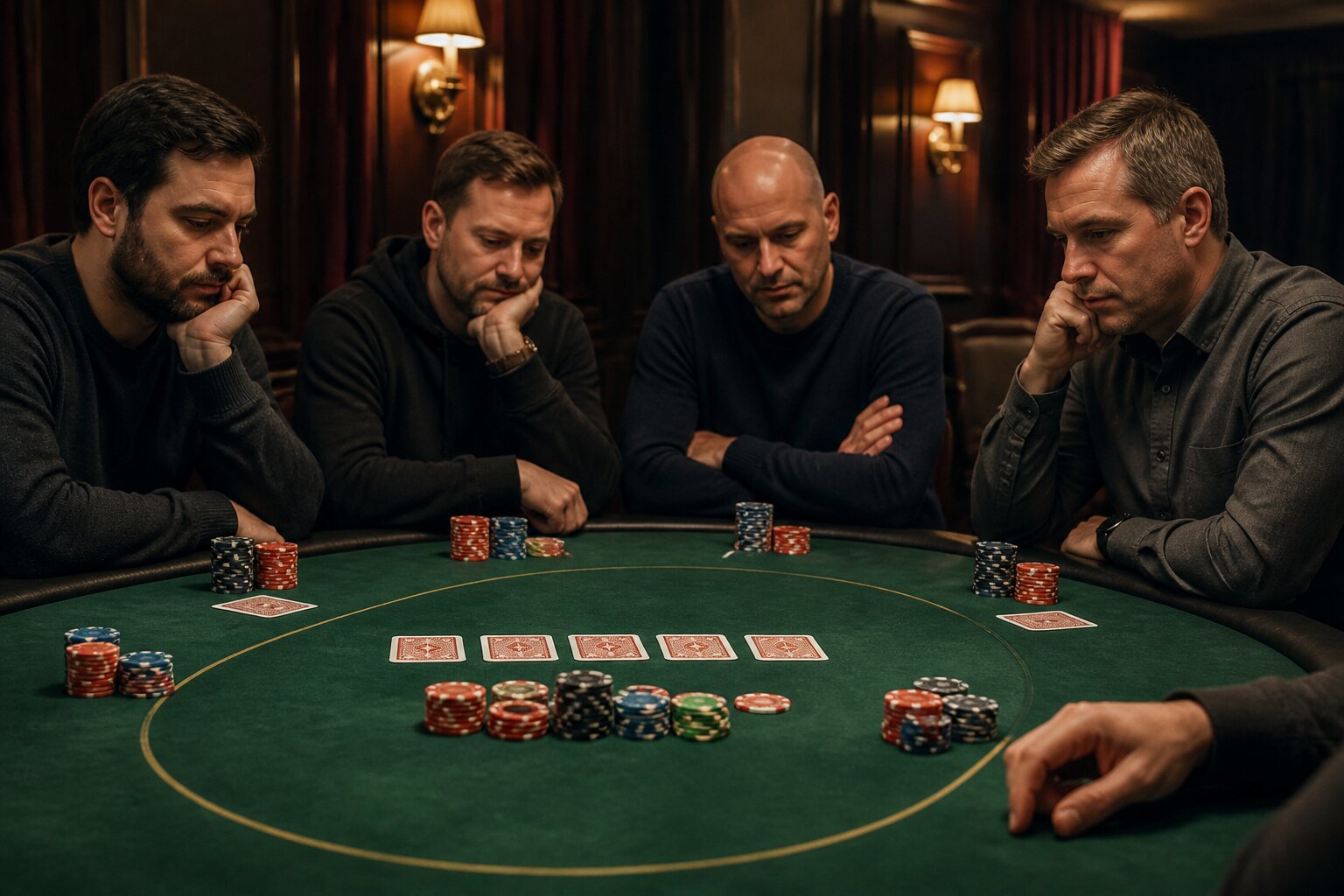
You’re sat at a poker table, chips in front of you, waiting to see who’ll make the first move. Instead of the usual bets and raises, every player simply checks, round after round. That quiet pattern changes the game in ways you might not expect.
Poker is built on tension and decision-making, so when checking becomes the default, the rhythm shifts. Pots stay small, the action slows, and the psychological game takes a different shape as players probe each other without committing extra chips.
This article explains what checking is, looks at the outcomes when everyone checks, and explores how that behaviour alters strategy and table dynamics. Read on to see how a passive table can still be rich with opportunity.
What Does Checking Mean in Poker?
Checking is a way to remain in the hand without putting additional money into the pot. It passes the action to the next player provided no bet has been made in that betting round. A player can check when first to act, or when all players before them have also checked.
A practical example: at the start of a betting round, Player A taps the table to indicate a check. The next player then faces the same choice—check and let the action pass, or place a bet that forces others to respond. Checking contrasts with betting, calling, or folding; it keeps you in play while maintaining the current pot size.
Players often check to see another card without risking chips, when uncertain about their hand, or to disguise hand strength. Checking can be a neutral move or a deliberate tactic: slow-playing a strong hand, inviting a free card, or testing opponents’ reactions. With that sense of how checking works, the next section shows what follows when every player makes that same choice.
Possible Outcomes When All Players Check
When every player checks in a betting round, the round finishes with no new money added to the pot and play moves to the next stage of the hand. What that looks like depends on the point in the hand where the checks occur.
Pre-flop: in games with blinds, if no one raises and players effectively check around, the flop is dealt and the action continues to the next betting round. Flop and turn: if all players check the flop, the dealer reveals the turn card and another betting round begins; repeated checking on the turn sends the play straight to the river. River: if everyone checks on the final round, the hand proceeds to showdown and the highest-ranking hand wins the unchanged pot.
A practical illustration: three players see the flop and all check. The turn appears for free and another sequence of checks can carry the hand to the river without additional stakes. At showdown, a modest pot is decided by the best hand among the remaining players. These outcomes keep the pot size determined mainly by earlier commitments, such as blinds, and they influence how risk and reward unfold later in a session.
How Does Checking Impact Betting Rounds?
When players routinely check instead of betting, the pace of the hand changes and opportunities that typically come with betting are reduced. Every check removes an opportunity to extract value, to apply pressure, or to fold out opponents, so betting rounds become quieter and often reach later streets with little change in pot size.
That quieter structure affects decision-making. With fewer bets to respond to, players get more information from later cards appearing for free, which can encourage cautious play. It also means strategic moves like semi-bluffs or forcing folds through raises are less common, so the game rewards patience and careful reading rather than aggression.
At the same time, each round still offers a point where someone can break the pattern with a bet. A single well-timed wager after a string of checks can change the whole hand by forcing opponents to make costly choices. The next section considers how that steady checking mood affects the players at the table and the psychology behind it.
The Psychological Impact of Universal Checking
When everyone checks, the table tends to adopt a cautious mood. That collective restraint often signals weak hands or uncertainty, and it slows the emotional tempo of the game—less tension, fewer dramatic confrontations, and more silent appraisal of opponents’ behaviour.
This environment alters how players think and act. Some may grow tentative, folding more readily in future spots because the table has conditioned them to expect low aggression. Others may use the lull strategically, concealing a strong hand through continued checking or waiting for the right moment to capitalise on opponents who have become passive.
Repeated checking can also change attention levels around the table; players may relax their focus when pots stay small, which creates chances for alert players to exploit predictable patterns. The psychological effects therefore cut both ways: they can make the game feel stagnant, but they also open doors for those who recognise when to shift from passivity to decisive action. With the mentality clear, next we look at the common situations that produce universal checking.
When Might Players Choose to All Check?
Several common situations tend to produce widespread checking, each reflecting the cards on the table and the incentives facing the players.
- Unpromising community cards: when the flop is low and unconnected, such as 2 of clubs, 7 of diamonds and 9 of spades, few hands improve and players often prefer to see another card without committing chips.
- Suspicion of slow-play: if players think someone may be slow-playing a strong hand, a wait-and-see approach becomes attractive to avoid being trapped by a late bet.
- Small pot size on later streets: near the river, when the existing pot is modest and hands are marginal, players commonly check to avoid a risky final bet.
- Early rounds after the blinds: with unproven cards and minimal information, players frequently adopt a conservative posture to avoid inflating the pot unnecessarily.
- Tournament situations around payout thresholds: when survival is more valuable than marginal gains, players may check more to preserve chips.
These scenarios explain why checking clusters happen, and they point to how game conditions shape behaviour. Understanding those triggers helps identify when a break from passivity might work best, which leads into how universal checking reshapes longer-term strategy.
How Does Universal Checking Affect Game Dynamics and Strategy?
When checking becomes the prevailing style, the table’s strategic landscape changes. Pots remain small, so relative gains from single winning hands shrink, and players who favour low-risk play see fewer opportunities to apply pressure. This stabilises the session for cautious players but also makes the table predictable in ways that can be exploited.
Seasoned players may adapt by introducing occasional aggressive bets to unsettle opponents who have grown passive. Such selective aggression can be highly effective: after repeated checks, a single strong bet can fold out hands that would otherwise see the showdown, or it can force costly calls from marginal hands.
Over time, habitual checking can cause players to miss value from made hands because they avoid betting when it would extract returns. Conversely, it can preserve chip stacks and reduce variance, which some players prefer. The right approach depends on the player’s objectives—fast profit, steady survival, or information gathering—and the table’s evolving tendencies. Recognising those tendencies creates the pathway to exploit or correct for a passive table style.
In short, a table of checkers is less about a lack of action and more about a different set of opportunities: smaller pots, more information-driven decisions, and well-timed aggression that can shift the balance. That balance is the final piece of the picture and shows why every pattern at the table is also an invitation to change it.
Play Online Casino Games at Slots UK
We invite you to become part of our welcoming community of players and enjoy the entertainment we have to offer. Experience the fun of online casino games in a friendly and engaging environment.
Getting started with us is straightforward: simply create your account, make a deposit and you are ready to explore our site. We look forward to seeing you enjoy your time with us at Slots UK.
**The information provided in this blog is intended for educational purposes and should not be construed as betting advice or a guarantee of success. Always gamble responsibly.