
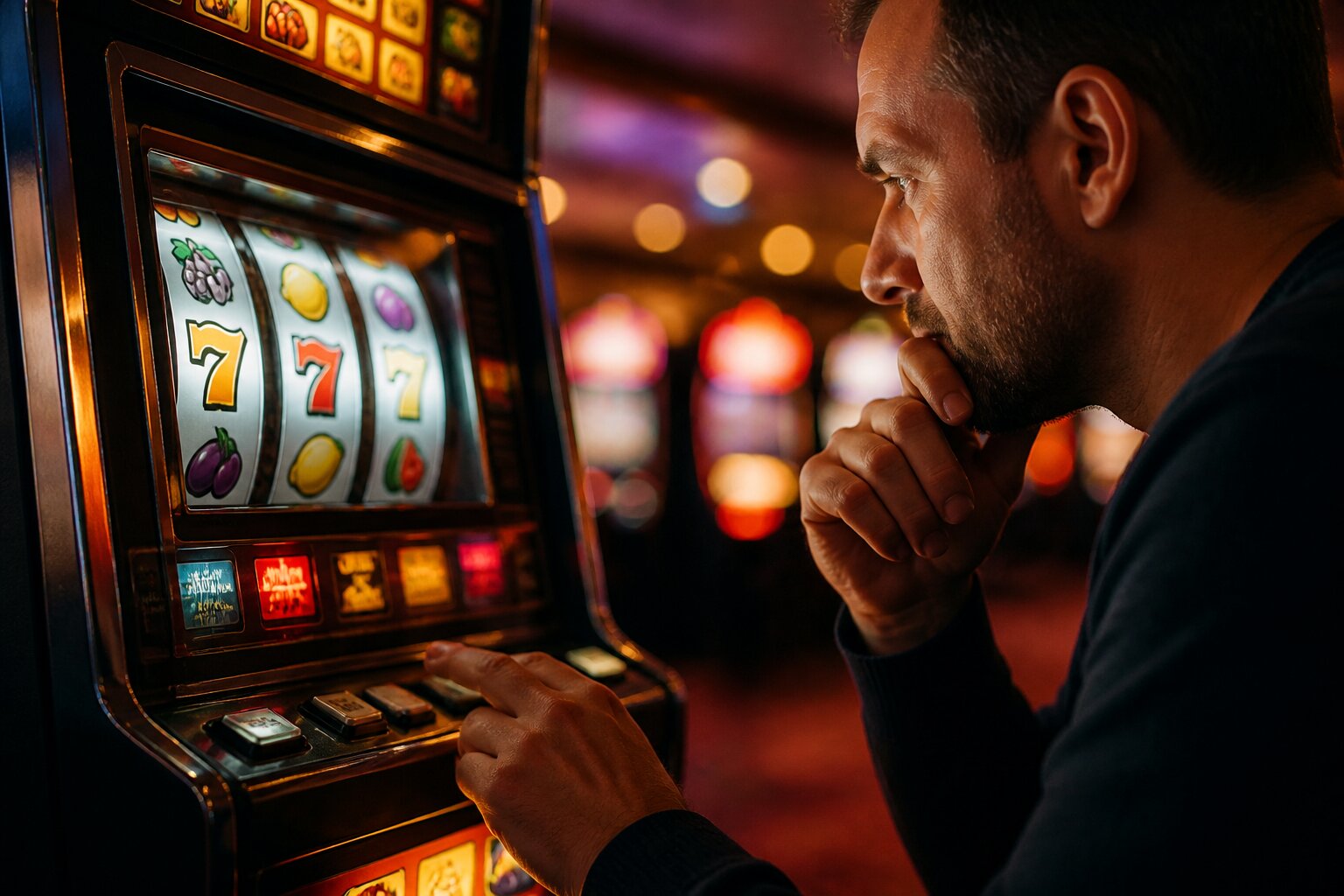
Have you ever found yourself staring at the spinning reels of a fruit machine, wondering if that next press could be the one that drops the jackpot? Maybe you’ve seen someone walk away from a machine and felt the urge to swoop in, convinced it's “due” a win. It’s a familiar feeling for anyone who’s ever had a flutter in a British pub, seaside arcade, or casino.
There’s a certain excitement when the lights flash and the coins clatter into the tray, and many myths swirl around what causes a payout. Before you pop in another pound, it’s worth taking a closer look at what might really be going on behind those spinning cherries and sevens and how that affects what you can expect next.
If you want to understand the mechanics and separate fact from folklore, the next section explains the systems that control each spin and what they mean for a player.
Understanding How Fruit Machines Work
Fruit machines in the UK are tightly regulated to guarantee fairness. Each spin you make is controlled by a Random Number Generator (RNG), a piece of software that ensures each game is independent and unpredictable. Because the RNG determines outcomes at the moment of play, previous spins do not influence future ones.
By law, machines must meet strict standards set by the regulator and often display a payout percentage, which indicates how much the game returns over many thousands of spins. For instance, a payout rate of 90% suggests that, on average, £90 is returned for every £100 wagered across a very large number of plays. That long-term figure is not a promise for any single session.
Independent testing confirms that the machine’s programming and RNG can’t be altered during normal operation. The only player-controlled variables are stake size and how many paylines are active; everything else—symbols, bonuses and the reel stops—is determined by the RNG and cannot be predicted. With that in mind, the next section looks at why certain sights and sounds often feel like clues, and why they don’t provide a reliable signal of an impending payout.
Physical and Digital Clues to Watch Out For
Many players believe there are secret signs that a machine is about to pay out. Players often talk about certain sights or sounds as if they’re clues to an upcoming win. These ideas are common in both classic pub fruit machines and the latest digital online slots. While it’s true that fruit machines are designed to be eye-catching and entertaining, the reality is less mysterious than it seems.
What Physical Signs Might Indicate a Payout?
With traditional fruit machines, players sometimes point to things like a loud clunk inside the cabinet, extra flashing lights around the reels, or the machine “filling up” with coins as reasons to expect a win. People also mention sequences of losing spins, a near-miss on the reels, or even how warm a machine feels. None of these are reliable indicators. The internal mechanics and the RNG decide results, so sights and sounds are part of the machine’s design to engage players rather than signals about the next outcome.
Do Digital Fruit Machines Show Any Telltale Patterns?
Digital machines and online slots use animations, celebratory sounds and tease screens to make gameplay lively. These effects can create the impression of momentum, but they do not alter the odds. The same RNG technology applies in digital formats, and any repeat-looking patterns are the result of programmed visual or audio feedback, not an underlying schedule of payouts. Even when a game appears to “tease” a bonus, the chance of a win remains the same for each spin.
Despite the attention-grabbing presentation, visual and audible cues are entertainment features. They do not give players an edge or a prediction of an imminent payout. Understanding this helps separate what machines are doing to retain interest from what actually controls outcomes, which leads naturally into the common myths that still circulate among players.
Common Myths About Fruit Machine Payouts
One of the most persistent beliefs is that a machine is “due to pay.” Regulars often claim that after a long dry spell a big win is bound to happen. Machines have no memory of previous results, so each spin is independent and unaffected by past losses or wins.
The idea of “hot” or “cold” machines is another popular myth. Players may describe a machine as being on a hot streak or going cold, but those impressions arise from how people perceive random sequences rather than any change in the machine’s behaviour. Timing the press of a button to influence a result is equally unfounded: outcomes are calculated the instant the spin is registered, and nothing a player does changes the RNG’s decision.
Some think large recent losses on a machine make a payout more likely next. Payout percentages operate over a very large number of plays, not one session, so the amount put in during a short period does not affect immediate odds. These myths can lead to risky choices, so recognising them makes it easier to treat machines as entertainment rather than a predictable source of wins.
How Random Number Generators Affect Outcomes
Every regulated fruit machine in the UK relies on an RNG to decide the outcome of each spin. This technology is central to game fairness and is governed under strict technical standards.
An RNG is an algorithm that continuously produces numbers; when a spin is played, the system maps one of those numbers to a specific reel position. This process happens in a flash, so it’s not possible to foresee or influence which number will be selected. Whether a machine has just paid out or stood idle for hours, the how the RNG functions ensures the next result remains unpredictable.
Independent testing and audits verify that RNGs meet required standards, preventing manipulation by players or operators. Knowing how the RNG functions explains why observable patterns or machine behaviour cannot be relied upon as indicators of future outcomes. With that clarity, it’s worth examining why the notion of payout cycles still persists and where that belief comes from.
Payout Cycles: Fact or Fiction?
Talk of payout cycles springs from the human tendency to spot patterns in randomness. When two wins appear close together or a jackpot follows a series of losses, it feels like a cycle has occurred. In truth, these are coincidences within a random sequence and not evidence of an engineered schedule.
Under regulatory standards, machines do not follow cycles; outcomes remain independent from spin to spin. Payout percentages are statistical averages calculated over many plays and cannot be used to predict when a single machine will produce a large win. Any apparent cycle is the product of random variation rather than a design feature.
Understanding that cycles are an illusion helps set realistic expectations about play, and from there it makes sense to consider how to keep gaming enjoyable and safe.
Playing Responsibly with Fruit Machines
The most important part of using fruit machines is keeping play enjoyable and under control. Choosing a clear budget before starting, and not spending more than intended, helps prevent losses becoming a problem. Deciding how long to play and taking regular breaks supports a balanced approach and reduces the risk of play becoming overwhelming.
Tools on many sites and venues let players manage activity through deposit limits, time-outs or self-exclusion if needed, and confidential support organisations are available for anyone who feels they need help. If you want tailored tools or information on setting limits, our site provides options to help manage play safely.
By understanding how machines work, recognising common myths, and using the available safeguards, players can make informed choices and keep fruit machines as a form of entertainment that fits their personal limits.
Play Online Slots at Slots UK
We’d love to welcome you to our friendly community of players at Slots UK. Come along and discover the fun of playing with us.
It’s easy to join us: simply create your account, deposit some funds and you’ll be all set to enjoy our site. We look forward to seeing you play soon.
**The information provided in this blog is intended for educational purposes and should not be construed as betting advice or a guarantee of success. Always gamble responsibly.