
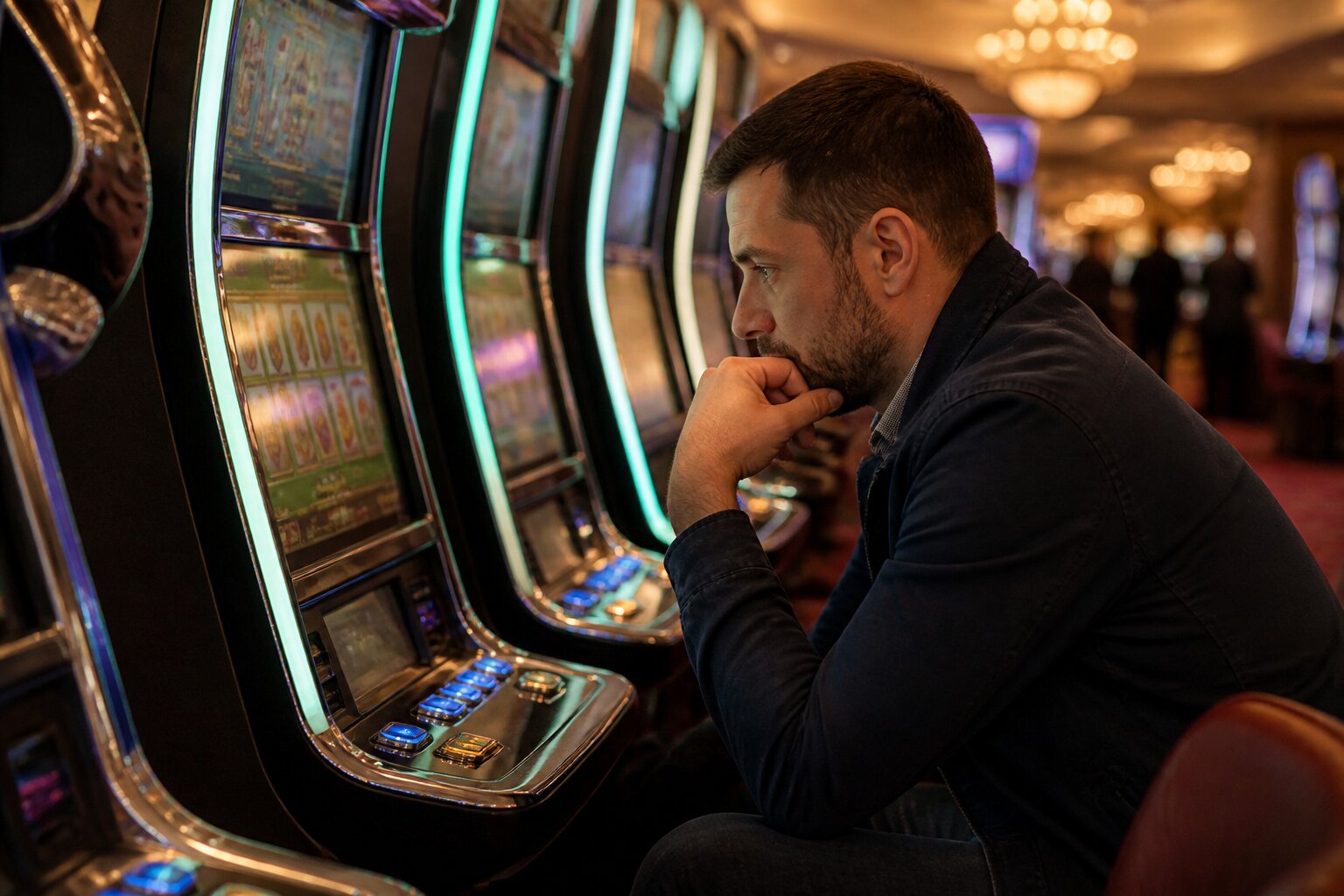
Ever strolled past the slot machines in a casino or scrolled through online slots and wondered if there’s a perfect moment to jump in? Some players swear by waiting for a slot that “feels due” for a win, even lingering nearby as someone else plays in the hope of catching a payout. Those stories travel fast in casino foyers and online communities.
The idea that a well-timed spin or hopping onto a “hot” machine after someone else has stopped adds a tempting layer of strategy to what is otherwise a simple game of symbols and reels. Before you start watching machines for patterns, it’s worth looking into where this belief comes from and what the evidence actually says.
What follows explains the lurking phenomenon, examines common timing myths, and clarifies how slot technology determines outcomes so you can decide how to approach play with clear expectations.
Understanding the Lurking Phenomenon in Casinos
‘Lurking’ is the practice of staying close to a slot machine and waiting for someone else to finish playing, under the impression that the machine is about to pay out. In physical casinos this can look like a player hovering at a respectful distance; online it might be tracking games with visible activity feeds or progressive jackpots so you can jump in when something seems imminent.
This behaviour rests on the belief that slots operate in patterns or cycles — that a string of losses makes a win more likely. Modern slots, however, do not work that way. They use Random Number Generators (RNGs), which means each spin is decided independently of previous spins. Because of that, lingering on a machine or watching another player play does not change the machine’s behaviour.
That said, the social aspects of lurking can still shape how people play: it may make sessions longer, encourage chasing a perceived streak, or influence how much is wagered. Those practical effects are worth bearing in mind even if the underlying theory about timing is unfounded. Next, let’s tackle the most common myths people use to justify waiting for a particular moment to play.
Debunking Common Myths About Slot Timing
The belief that timing or player actions can sway slot outcomes is widespread. Below are the most common myths and clear explanations of why they don’t hold up.
Is There a “Right” Time to Play Slot Machines?
Myth: There’s a special time of day when slots pay out more—such as evenings, weekends, or after a jackpot.
Fact: Slot results are governed by RNGs and regulatory oversight. Time of day or how busy a venue is does not affect the mathematics behind payouts.
Example: Some players claim machines loosen up late at night to attract customers. In practice, neither staff nor an operator can lawfully alter a machine’s payout frequency to match a schedule, and online games don’t change based on when you log in.
Example: Another rumour says machines get “tighter” temporarily after a big win. There is no reset or countdown after a payout; each spin is a fresh event with the same probability distribution as any other.
Understanding this removes the idea that the clock can be used as a strategy. With that cleared up, the next section looks at whether watching other players offers any real advantage.
Does Watching Players Improve Your Chances?
Myth: Hovering near a machine or taking over after someone else’s losing streak increases odds of winning.
Fact: Each spin is independent. A sequence of previous outcomes neither increases nor decreases the probability of a future outcome.
Example: In a land-based casino, seeing a long losing run might create the impression the next spin must produce a win, when in fact the odds remain unchanged. Online, watching activity feeds or chat for “hot” machines will not reveal a dependable pattern because game results are random by design and monitored for fairness.
Believing otherwise can change how someone behaves at the machine, however, so it’s useful to separate psychological effects from mechanical reality. With those myths addressed, the technical explanation behind how outcomes are set will make the mechanics completely clear.
Random Number Generators: How Slot Machines Actually Work
Slot games use Random Number Generators (RNGs) to determine the outcome of every spin. An RNG is an algorithm that produces sequences of numbers at very high speed; when a spin is registered, the machine or game maps the current RNG output to symbols on the reels. Because the RNG is running continually, the exact millisecond a spin is initiated is what determines the result.
This design means there is no memory in the machine of past wins or losses: the outcome is not accumulated or queued. Popular titles operate under the same principle—every spin is independent and determined at the moment it is played.
To preserve fairness, regulators require independent testing and certification of RNGs. Those audits verify that results follow the expected probability distributions and that the game behaves as described in its return-to-player figures. Knowing how RNGs work helps explain why patterns perceived by players are usually coincidences and not signals. Understanding the technology clears the way for looking at how player behaviour interacts with play.
Impact of Player Behaviour on Slot Outcomes
Players often adopt behaviours they think will influence results: timing spins, watching other players, or switching machines after a losing run. Technically, none of these actions affect the RNG or the game’s mathematics. The moment a spin is made, the RNG has already determined the symbols that will appear.
Behavioural effects are nevertheless important in how sessions unfold. For example, spending extra time watching a machine may increase the total money wagered; trying to “beat” a perceived streak can lead to extended play or larger bets than intended. Those consequences come from human decision-making, not from the game changing its probabilities.
Recognising this distinction—between what changes the game and what changes a player’s conduct—helps keep expectations realistic. With that perspective in mind, it’s useful to hear what researchers and industry observers conclude about lurking and timing.
What Do Casino Experts Say About Lurking and Timing?
Scholars, regulators and support organisations consistently find no evidence that timing or observing other players affects the statistical behaviour of slot machines.
Professor David Forrest, University of Liverpool (Expert in Gambling Studies): “There’s no pattern to slot wins or losses. Attempting to use timing or observation to predict results is futile, as every spin is an isolated event controlled by randomness.”
UK Gambling Commission guidance: The Commission requires tested and certified RNGs to guarantee fairness, and states that it is not possible to influence or predict outcomes through timing or tracking player activity.
GamCare: Advice from support services highlights that beliefs in “streaks” or waiting for a machine to “pay out” are common myths and can lead to riskier patterns of play. They recommend keeping play within pre-set limits and being aware of how behaviour affects session length and spend.
These expert views underline the mechanical reality of how slots operate and the practical risks of letting myths guide behaviour. With that assurance, consider how best to approach slot play in a way that keeps personal control and realistic expectations in place.
Final note: Slot machines operate on randomised outcomes, so strategies based on timing or lurking do not change odds. Treat play as entertainment, be mindful of how behaviours influence spending, and keep sessions within limits that suit personal circumstances.
Play Online Slots at Slots UK
We'd love to welcome you to Slots UK, where you can enjoy our selection of games whenever you fancy. Take your time and play at your own pace, just how you like it.
Getting started is straightforward: simply create an account, make a deposit and you are ready to explore our site. We hope you enjoy spending time with us.
**The information provided in this blog is intended for educational purposes and should not be construed as betting advice or a guarantee of success. Always gamble responsibly.