
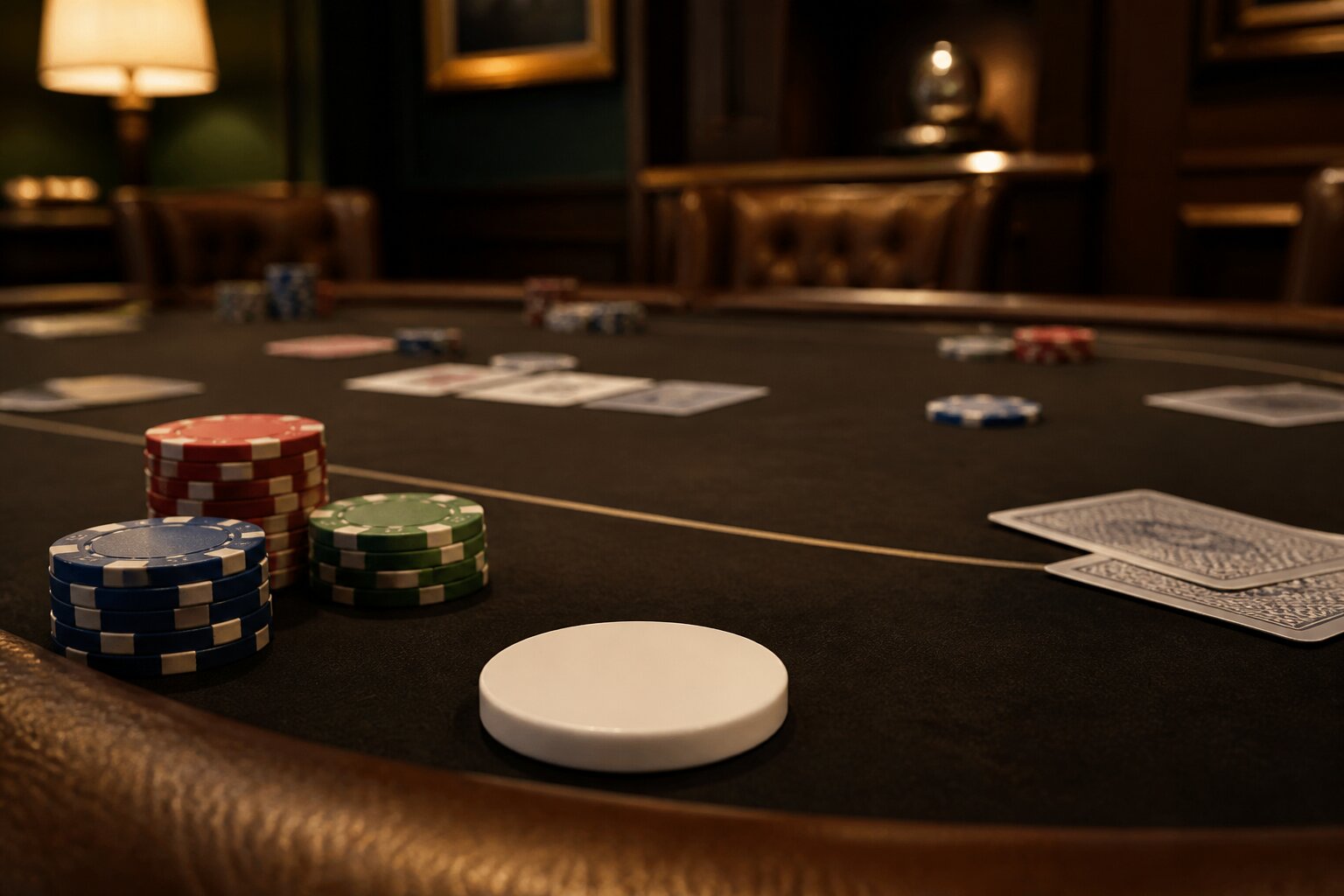
Understanding the button position and blinds is key to mastering any game of poker. These two concepts shape the action at every table, affecting your strategy and the flow of each hand.
Whether you’re a beginner learning the basics or refreshing your knowledge before a session at a club or online, getting to grips with the button and blinds will give you a clearer sense of how each round unfolds.
Curious about who posts the blinds, how the button moves, and why these roles matter in every betting round? Read on for straightforward explanations and examples that make the mechanics easy to follow.
What Is the Button in Poker?
The button is a small disc used to mark the dealer position for the current hand. It moves clockwise one seat after each hand, indicating which player is treated as the dealer for betting order and positional purposes.
Its primary function is procedural: the button determines the sequence of play, so players know who acts first and who acts last in each betting round. In home games the button-holder often deals the cards; in organised games the cards are dealt by staff or software, but the button still shows that round’s dealer position.
Because acting later in a betting round generally offers more information about opponents’ choices, the button is considered a strategically valuable position. However, that advantage is temporary: the button rotates, so every player experiences each position as the session continues.
Why Is the Button Position So Important?
The button controls the order of action at the table, which influences decisions throughout a hand. Acting last in post-flop rounds gives more information about opponents’ intentions, helping with choices about betting, checking or folding.
Rotation of the button ensures equity across a session. Over many hands, each player will post blinds and occupy early, middle and late positions, which balances the advantages and obligations associated with each spot.
This positional dynamic affects more than single decisions: it shapes broader strategy. Players adjust hand selection, bet sizing and bluffing frequency depending on whether they’re on the button, in the blinds, or out of position. Understanding that shift helps you interpret opponents’ likely ranges and respond accordingly.
Before we look at how blinds work in practice, it’s helpful to see how compulsory bets get a hand going.
How Do the Blinds Work in Button Poker?
Blinds are forced bets that create an initial pot and stimulate action. There are two standard blinds: the small blind and the big blind. The small blind sits immediately to the left of the button; the big blind sits one seat further left and is typically twice the small blind.
These bets encourage players to compete for the pot rather than folding every hand. Because they rotate with the button, the cost of participating is shared across the table over time. Blinds also affect strategic choices: players will tighten or widen their starting-hand ranges based on blind size relative to the stacks in play.
In cash games and tournaments the structure can vary — blind amounts, frequency of increases in a tournament, and the presence of antes all change how aggressively players compete. When blinds rise, pressure builds on shorter stacks and strategy shifts toward preserving chips or looking for spots to accumulate them.
What Happens When the Button Moves?
After each completed hand the button moves one seat to the left, which shifts who posts the small and big blinds and who acts last. This keeps the distribution of duties and opportunities fair across a session.
When the dealer position moves, the whole order of action adjusts: players who were late now find themselves in the blinds or early positions, and those who were posting blinds will move into later, more favourable seats. That ongoing rotation is central to how strategy evolves over time, as players adapt their ranges and tactics to the current seat.
How Are Small Blind and Big Blind Assigned?
The player immediately to the left of the button posts the small blind; the next player to the left posts the big blind. This assignment is automatic and changes each hand as the button moves.
Because every player will cycle through these seats, the system ensures that everyone contributes to pots and faces the same mix of strategic situations. In games where a player misses a blind due to being away from the table, there are commonly applied rules to bring their contribution back into alignment when they return.
If you’re wondering how these mechanics show up in other poker varieties, the next section explains the differences.
The Difference Between Button Poker and Other Formats
Button poker — meaning games with a moving dealer button and rotating blinds — is the standard in community-card games like Texas Hold’em and Omaha. Those formats depend on positional rotation to manage fairness and flow.
Other poker variants use different systems. In stud games there’s often an ante system and a fixed order of betting rather than a rotating dealer button and blinds. Some casual home games may use a fixed dealer, but organised play almost always uses the rotating button because it spreads obligations and opportunities evenly.
Tournament play adds another layer: blinds increase at scheduled intervals to force action and create pressure as the event progresses. That changing blind structure affects strategy more dramatically than in cash games, where blinds remain constant.
Common Myths About Button Position and Blinds
Several myths about the button and blinds circulate among newcomers. One is that the button grants a permanent advantage; in truth, any positional benefit is temporary because the button moves every hand.
Another is that blinds are punitive. They are a structural element intended to generate pots and encourage engagement; since they rotate, everyone pays their share over time. A further misconception is that players can avoid posting a blind; rules prevent skipping blinds when it’s a player’s turn to post, maintaining fairness for everyone involved.
Understanding these points helps separate rule from rumour and lets you focus on strategy rather than misconceptions.
Frequently Asked Questions About Button Poker Rules
Below are clear answers to common queries about how the button and blinds operate, designed to remove any lingering uncertainty.
Do I Have to Post Both Blinds in Button Poker?
No. Each player posts one blind when it’s their turn: either the small or the big blind. Over many hands everyone will occupy both blind positions as the button rotates.
What Happens If a Player Misses Their Blind?
If a player is away from the table when it’s their turn to post, house rules typically require them to make up the missed blind on return or be left out of play until they post. These rules preserve fairness for those who stayed at the table.
Can the Same Person Be the Button Two Hands in a Row?
No. The button moves one seat to the left after every hand, so a single player cannot hold it consecutively.
Is It Mandatory to Play Every Hand When I’m the Button or a Blind?
No. Posting a blind is a forced wager but does not obligate you to continue with the hand. Players may fold after posting the blind if they choose.
If gambling ever feels like it’s becoming a problem, help is available from confidential support services. Set limits that suit your finances and take breaks when needed; poker is meant to be an entertaining challenge, not a source of harm.
**The information provided in this blog is intended for educational purposes and should not be construed as betting advice or a guarantee of success. Always gamble responsibly.