
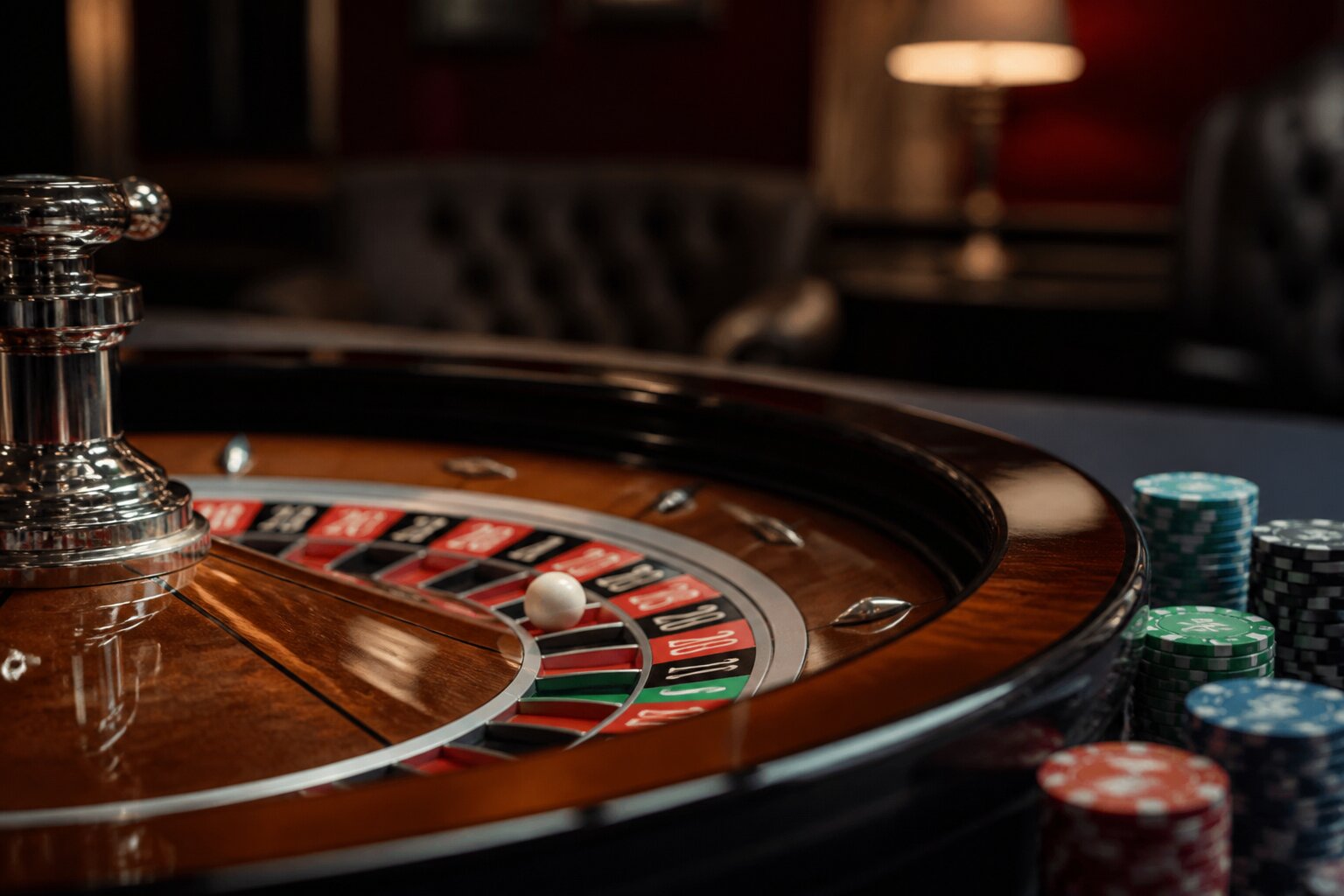
Have you ever wondered what the chances are of the same number coming up more than once in a game of roulette? It’s a question many players ask while watching that little white ball bounce around the wheel.
Understanding the odds and how different versions of roulette change those odds can help you make clearer decisions at the table. Whether you are new to the wheel or simply curious about the numbers behind the game, this article walks through the key points in plain language.
Read on to find out how often repeats occur, how the table layout affects your chances, and what the maths really says about streaks.
What Does “Same Number” Mean in Roulette?
The phrase “same number” means the ball lands in the identical numbered pocket on more than one spin. If 17 appears on one spin and then appears again on the next, that is a repeat. Each pocket on the wheel is a distinct outcome, and when we talk about repeats we mean the exact identical pocket, not just the same colour or parity.
Every spin is independent, so the probability for a specific number is the same on each spin. This independence explains why repeats happen occasionally but are generally uncommon. Knowing this helps when interpreting runs of repeats: they are part of how random results can behave over time.
Understanding the wheel’s layout next will make these probabilities easier to follow.
Understanding Roulette Table Layouts
Roulette tables display all the betting options beside the wheel, including the grid of numbers and the outside bets. Two common layouts are European and American. Both use numbers 1 to 36, but the European layout includes a single zero pocket while the American layout adds a double zero pocket.
That extra pocket in the American version increases the total number of outcomes and therefore changes the probabilities for single-number bets and other wagers. Colours and number arrangement are standardised so players can place bets quickly, but that small difference in pockets is what changes the maths. With the layout in mind, the next section shows exactly how single-number bets translate into real odds.
Single Number Bets: What Are Your True Odds?
A single number bet, often called a straight up bet, is when a player stakes on one specific number. On a European wheel with 37 pockets, the probability of a chosen number appearing on a single spin is 1 in 37, roughly 2.7%. On an American wheel with 38 pockets, the chance is 1 in 38, about 2.63%. These probabilities represent the chance of a single successful spin and do not change from spin to spin, because each spin is independent.
Payouts are high for these bets—35 to 1—but the real likelihood of success remains low because of the number of possible outcomes. Although the nominal payout appears generous, the presence of the zero pocket, or pockets in the case of American roulette, gives the house its edge. That edge is reflected in the expected return over time: European roulette has a house edge of 2.70% and American roulette has a higher house edge of about 5.26%.
These figures are the foundation for understanding streak probabilities, which the next section explores by showing how independent spins combine mathematically. When considering multiple spins, remember that the probability of a run of successes or failures is found by multiplying the single-spin probabilities together, because each spin remains an independent event.
How Probability in Roulette Is Calculated
Probability in roulette is calculated by comparing the number of favourable outcomes to the total number of possible outcomes. Since each spin is independent, the chance of a particular number on one spin is always the same. For a single spin that chance is 1 divided by the total pockets on the wheel.
When assessing multiple spins in sequence, probabilities multiply. For instance, the chance of the same number appearing on two consecutive spins is the product of the single-spin probabilities. This multiplication is what makes long streaks increasingly unlikely, and it leads naturally into how the house edge alters expected returns over many spins.
House Edge: European vs American Roulette
The house edge measures the casino’s long-term advantage and comes from the difference between true odds and the fixed payouts. European roulette, with its single zero, has a house edge of about 2.7%. American roulette, with the extra double zero, raises the edge to about 5.26%.
A higher house edge means the expected return to players is lower over many spins, and that is why some players prefer the single-zero layout when they can. Knowing the house edge clarifies how the game behaves in the long run and sets the stage for examining how often the same number can reappear during play.
What Are the Chances of the Same Number Reappearing?
Repeats do occur, but they are relatively uncommon because of how probabilities multiply across independent spins. For two consecutive spins to land on the same chosen number on a European wheel, the probability is 1 in 37 multiplied by 1 in 37, which equals 1 in 1,369, or about 0.073%. On an American wheel the equivalent figure is 1 in 1,444.
For longer streaks the probability drops fast. Three consecutive appearances on a European wheel are 1 in 50,653, and the denominator rises exponentially with each additional spin. These calculations make it clear why long runs of identical numbers are particularly rare. The next section explores common beliefs about “hot” and “cold” numbers and how they match the maths.
Do Popular Beliefs About Hot Numbers Affect Odds?
Many players track so-called hot numbers that have appeared frequently in recent spins and cold numbers that have not appeared for a while. These notions suggest a number might be more likely or less likely to come up next, but in a properly operated roulette game every spin is independent and mathematical probabilities remain constant.
Patterns that seem meaningful are just random clustering. Observing such patterns can be interesting, yet they do not change the actual odds for future spins. With that in mind, the following section separates myth from mathematics and explains why systems based on these beliefs cannot alter outcomes.
Myths vs Mathematical Reality in Roulette Probability
Stories about wheels “remembering” past results or numbers being “due” are at odds with how probability works. Each spin is an independent event with the same set of possible outcomes every time, so past spins do not influence future ones. No betting method, superstition or pattern-spotting can alter the fixed probabilities that govern the wheel.
Recognising this helps avoid overreliance on apparent patterns and promotes clearer expectations about what the game can deliver. Accepting the mathematical reality reduces the temptation to chase losses or to increase stakes based on a false belief in predictability. That perspective supports more measured decision making while playing.
With the maths understood, looking at outcomes can become a way to appreciate randomness rather than a guide for prediction. The final section offers practical, responsible ways to enjoy that observation safely and to keep play entertaining without mistaking chance for control.
Practical Tips for Analysing Roulette Outcomes
Analysing past results can be enjoyable as a way to see how random sequences behave, but it should not be used as a predictive tool. Observations about frequency or clustering are interesting in their own right and can deepen understanding of probability.
Keep play within personal limits by setting clear budgets and time boundaries before sitting down at the table. Use available account tools to control deposits and session length if needed, and consider taking breaks away from the game to check how you are feeling. These measures help preserve enjoyment and maintain control.
Above all, treat analysis as part of the experience rather than a method to gain an edge. With the mathematics and practical measures in place, you can appreciate the rare moments when repeats occur while keeping play responsible and informed.
**The information provided in this blog is intended for educational purposes and should not be construed as betting advice or a guarantee of success. Always gamble responsibly.