
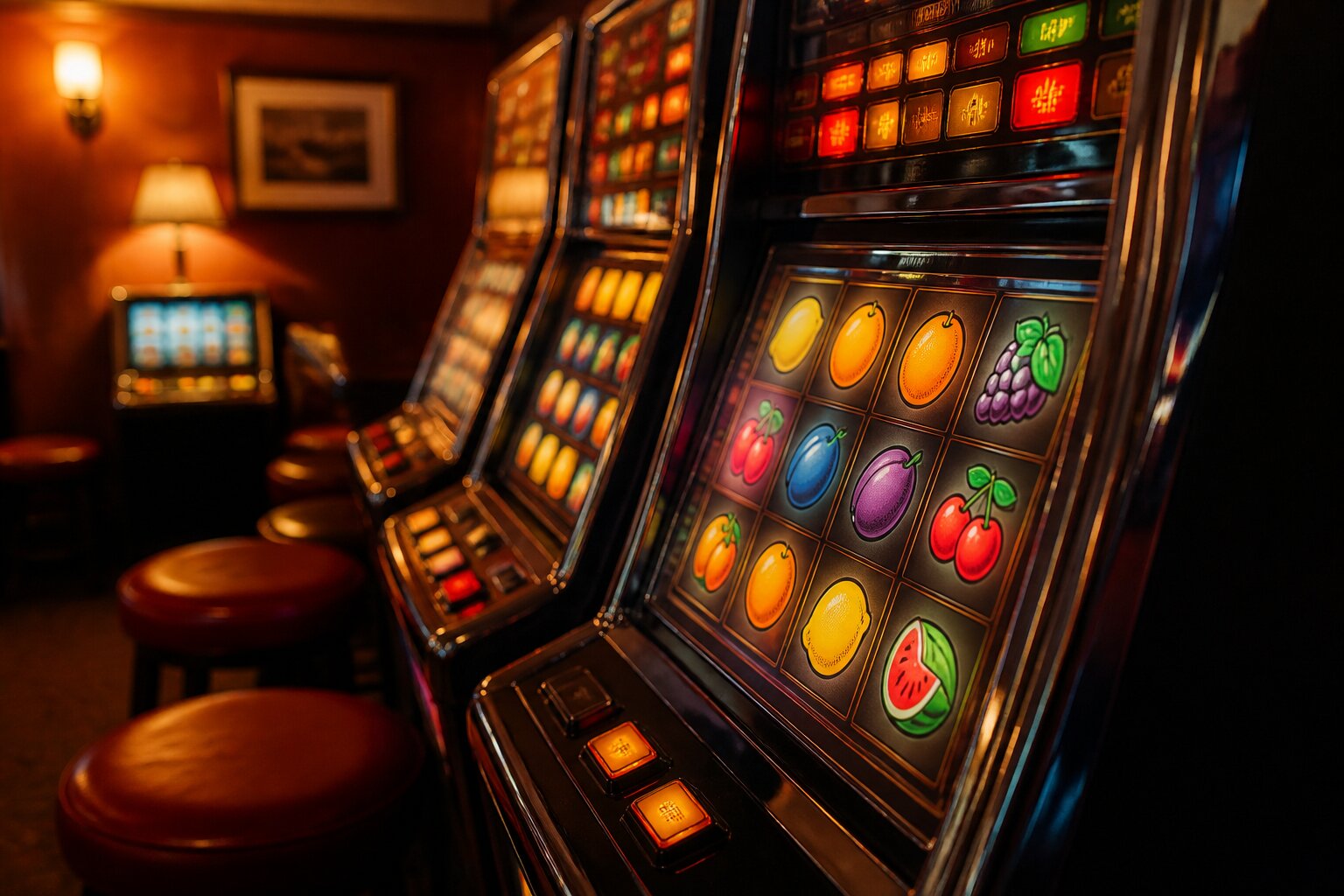
Ever wondered why so many people in the UK call fruit machines “puggies”? It’s a curious little word, used mainly in Scotland and parts of the north, and it tells an interesting story about language and local culture. These games have been part of British social life for generations, from pub corners to seaside arcades.
Read on to discover where “puggies” came from, how the name fits into regional speech, and why the same machines carry different labels across the UK.
What Does “Puggies” Mean in the UK?
In Scotland, “puggies” is a common informal name for fruit machines or slot machines. You might hear it in a pub in Glasgow or in conversation among older locals; elsewhere in the UK people are more likely to say “fruit machine” or “slots”.
The term refers specifically to the mechanical or electronic gaming machines with spinning reels and familiar symbols such as fruit or bars. It is not used for other forms of gambling equipment, and it is primarily a regional expression rather than a technical classification.
While regional words like this are part of everyday speech, it is worth noting that these machines are for adults only, and UK laws require operators to follow clear rules about age and safe play.
Where Did the Term “Puggies” Originate?
Linguists trace “puggies” back to the Scots word “puggy”, which historically meant “monkey” in local dialect. The connection between monkeys and slot machines may come from early machines that featured small monkey figures or mascots, and from the mischievous, attention-grabbing nature of both monkeys and arcade devices. Historical language references support this line of development, showing how a playful term moved from general slang into a specialised nickname.
This evolution illustrates how everyday objects can pick up local names that reflect culture, design details, or social habits. Over several decades the word settled into common use in parts of Scotland, while elsewhere different terms prevailed.
Regional Variations: Slots, Fruit Machines, and Puggies Across the UK
Across the UK the same machines are known by different names. In England and Wales, “fruit machine” is widely used because many of the original symbols were pieces of fruit. In Scotland, “puggie” remains familiar in some communities. “Slots” or “slot machines” tend to be the preferred term in casinos and in contexts where international terminology is common.
These differences are linguistic rather than technical. A machine called a “puggie” in one town will function the same as a “fruit machine” down the road. The variation matters mostly for understanding local speech and the social setting where these machines are found.
To move from regional names to how the machines became part of daily life, the next section looks at their rise in popularity.
How Did Fruit Machines Become Popular in the UK?
Fruit machines arrived in the UK in the early 20th century and quickly became fixtures in pubs, clubs, and seaside arcades. Their bright symbols and straightforward play appealed to adults looking for brief entertainment. Over time, manufacturers added features such as nudges and holds, which introduced more variety into play without changing the basic format.
Availability played a large role in their popularity. Placed in places people already gathered, the machines became part of social routines rather than a specialised hobby. Legislative changes through the decades shaped how they were deployed and regulated, ensuring protections for players and standardising odds and prize structures.
The shift to online and mobile platforms broadened access further, while regulation adapted to cover new delivery methods. This kept the essential form of the machines familiar to old and new audiences, even as the way people play evolved.
Are Fruit Machines and Puggies the Same Thing?
Yes; the terms refer to the same category of gambling device. “Fruit machine” and “puggie” describe identical machines in design and function. The real difference is regional vocabulary rather than any technical or regulatory distinction.
Understanding the terminology helps when reading local conversations or historical accounts, but it does not change how the machines work or how they are managed under gambling rules. The machines remain subject to the same legal definitions, age restrictions and operational standards regardless of the name used.
Having cleared up the naming, it is worth addressing some common misconceptions that surround the word “puggies”. These include:
- That a different name implies a different level of skill or control; in reality the outcomes and player options are governed by the same game mechanics and regulations.
- That puggies are somehow less regulated or older technology; they are covered by the same licensing and testing requirements as fruit machines.
- That terminology indicates a different payback or fairness; return-to-player and fairness are set by the game design and oversight, not the colloquial name.
Clarifying these points can help readers interpret discussions about these machines without assuming technical or legal differences based solely on vocabulary.
Common Myths About the Term “Puggies”
A common misconception is that “puggies” denotes a special kind of machine with different features or rules. In truth, it is simply a regional nickname. Another myth is that local vocabulary confers any advantage or insider knowledge; language choice does not influence how a machine operates.
Some assume the word implies machines are exclusive to Scotland. While the word is mainly Scottish, the machines are widespread across the UK and go by different names in different places. Separating myth from fact helps keep the focus on accurate history and clear expectations.
Next, we’ll look at how the word sits in modern British culture.
The Modern Use of “Puggies” in British Culture
Today “puggies” carries a nostalgic or regional tone. It still appears in everyday speech, particularly among older speakers and in community settings where local dialects remain strong. Occasionally the word is used in media or fiction to lend an authentic regional flavour.
Language change means more people now say “slots” or “fruit machines”, but “puggies” survives as a marker of local identity and history. That sense of continuity explains why the word still appears in conversations and cultural references rather than disappearing entirely.
And finally, a brief note to close the topic: regional names like “puggies” show how everyday language adapts to local life, and they help preserve small pieces of social history while the machines themselves continue to be regulated and played by adults under clear rules.
**The information provided in this blog is intended for educational purposes and should not be construed as betting advice or a guarantee of success. Always gamble responsibly.