
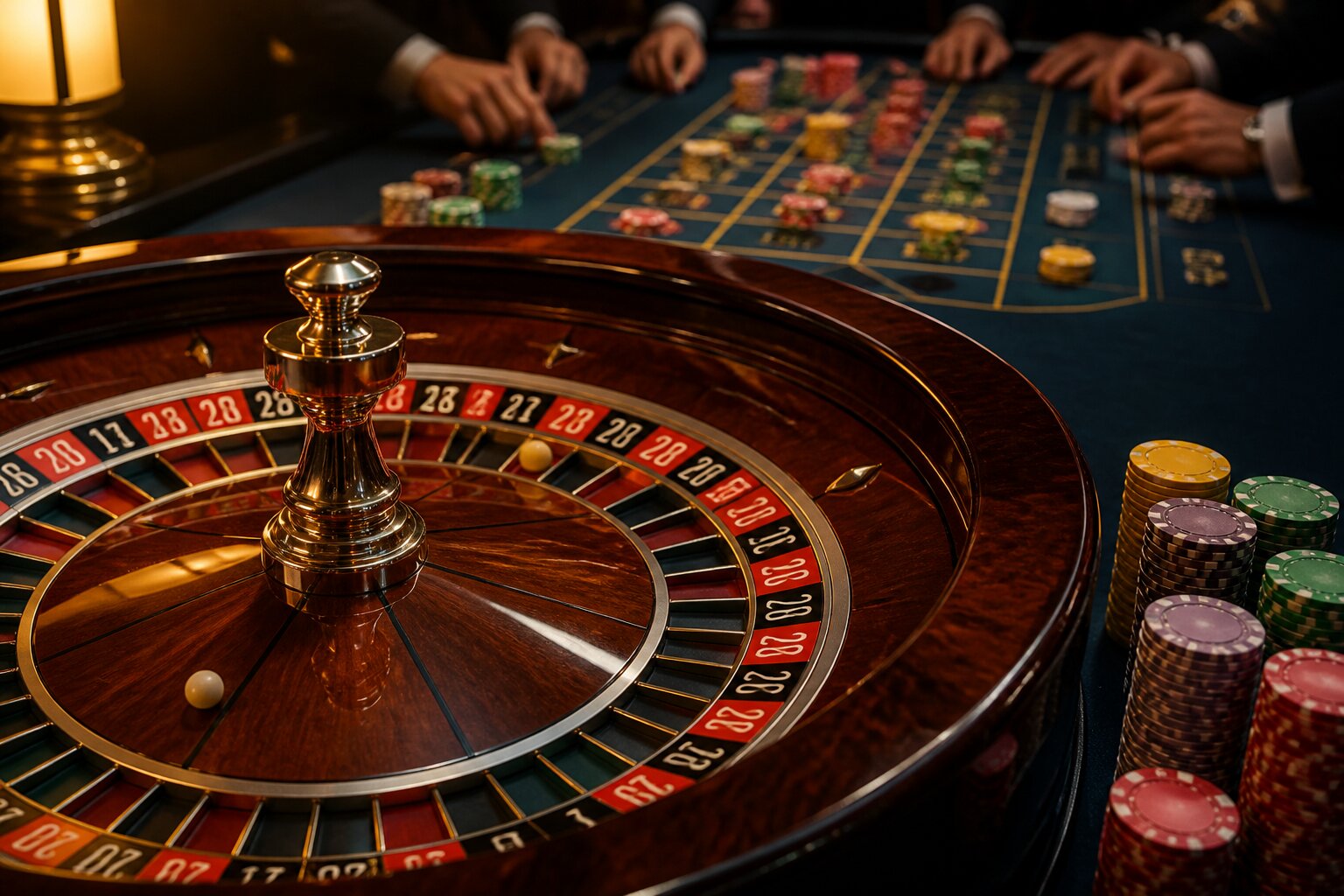
If you’ve ever watched the small white ball circle the roulette wheel, you’ll know how every spin can hold a moment of tension. Some numbers attract more attention than others, and stories grow around them until they become part of the game’s folklore.
This article examines those stories and the maths behind them. We’ll look at why one number gets singled out, how probabilities actually work, and what that means for your choices at the table.
What Is the Worst Number in Roulette?
When players name a “worst” number, they most often mean 0. On a standard European wheel there is a single green pocket that is separate from the red and black numbers and it changes how some bets are resolved.
Zero’s reputation comes from the way it interacts with common bets. Most even-money bets, such as red or black and odd or even, are treated differently when the ball lands on zero, so it can feel like a spoiler. That said, any single number on a correctly operated wheel has the same statistical chance of appearing on a given spin, which in European roulette is 1 in 37.
In short, zero matters because of the rules attached to it, not because it behaves differently from the other pockets.
Understanding Roulette Odds: House Edge & Probabilities
Roulette outcomes are determined by random spins, and the key concept to understand is the house edge. This is the mathematical margin the casino has over time, created by the presence of the zero pocket.
On a European wheel with 37 pockets, the zero makes even-money bets slightly less than 50/50. For example, betting on red resembles a 50/50 choice, but the green pocket reduces the actual win probability a little. That small difference is how the house maintains its edge.
Probabilities are simple and fixed. Every number and colour has the same chance on each spin. Knowing the underlying odds helps set realistic expectations and shape sensible choices about which bets to make.
Why Is Zero So Important in Roulette?
Zero is important because it is excluded from common bet categories: it is not red or black, nor odd or even. When it lands, many standard wagers lose. That rule is the practical source of the house advantage in roulette.
In practical terms, a straight bet on a single number that wins pays 35 to 1 while there are 37 or 38 possible outcomes depending on the wheel. That discrepancy between the true odds and the payout is driven by the presence of zero. On wheels with a single zero there are 37 pockets, and on double zero wheels there are 38, which slightly increases the operator advantage on American-style wheels.
From a mathematical viewpoint, if the zero did not exist, several bets would be exactly even between player and house. Examples of these even bets include:
- Red or black
- Odd or even
- High or low
Because zero is neither red nor black, neither odd nor even, and not in the high or low half, its inclusion breaks that balance and creates the small edge that ensures the game is profitable for the operator over many spins. That edge is cumulative and becomes clear only over a large number of plays, not on any single spin.
Understanding this helps explain why zero attracts attention and why its effect is structural rather than mystical. It is a rule built into the wheel and the payouts that changes the long-term maths of the game, not a sign of luck or intent.
Common Myths About Unlucky Numbers in Roulette
Casinos and online forums are full of tall tales about certain numbers being more likely to lose. These stories persist because humans notice patterns and remember striking runs. But observation does not change how the wheel works.
Numbers such as 13 or 17 may be talked about more often, mostly because of cultural associations or memorable sequences. In reality, every pocket has equal probability on any spin of a fair wheel. Claims that some numbers are systematically worse are not supported by probability.
If you hear someone insisting a particular number is guaranteed to cause losses, it is worth reminding yourself that anecdotes do not alter the underlying maths.
Myth-Busting: Do Certain Numbers Always Lose?
Every number has the same chance every spin. The wheel does not track past results or adjust its behaviour. Streaks happen by chance, but they do not create a different probability for future spins.
So while stories about “always losing” numbers make for good conversation, they do not reflect how the game operates.
Risks Associated With Betting on the Worst Number
Betting on any single number carries the same low probability of success. On a European wheel, the chance of a single-number win is 1 in 37, which means losing is the most common outcome over short sequences of spins.
Because those odds are long, staking significant sums on single-number bets can produce a lot of losing results before a win occurs. That volatility is a normal part of single-number bets and explains why many players prefer broader bets that offer more frequent, smaller returns.
Keep track of how much you are staking and set sensible limits so that play stays within your budget. If you find yourself changing plans in response to losses, pause and reassess. Support and advice are available if you feel your play is becoming problematic.
Should You Avoid the Worst Number in Roulette?
Choosing which numbers to bet on is a matter of preference rather than necessity. Zero’s reputation is tied to its effect on bet outcomes, but from the perspective of probability it is no different to any other pocket.
Some players avoid betting on zero because they dislike how it affects even-money bets. Others include it in straight-up selections for its higher payout if it wins. Both approaches make sense depending on whether a player values more frequent smaller wins or the larger payouts that come with single-number bets.
Make decisions based on the odds and your personal approach to risk. That will keep play purposeful and aligned with your expectations.
Roulette Number Odds FAQs
Below are clear answers to common questions about roulette odds and how they affect play.
Is any number truly “unlucky” in roulette?
No. Each number has the same chance to land on each spin. The notion of an unlucky number is a cultural idea, not a statistical fact.
What are the odds of a single number winning?
On a European roulette wheel the odds are 1 in 37, or about 2.7%. Those odds apply equally to every number on every spin.
Does betting on certain numbers change my chances of winning?
No. Your chances depend on the type of bet you place and the number of possible outcomes, not the identity of the number chosen. Every spin is independent.
Where can I get help if I’m worried about my gambling?
If gambling stops being enjoyable or causes concern, confidential advice and support are available from organisations such as BeGambleAware and GamCare. Safer-play tools provided by operators can also help manage time and spending. Seeking help early is often the most effective approach.
**The information provided in this blog is intended for educational purposes and should not be construed as betting advice or a guarantee of success. Always gamble responsibly.