
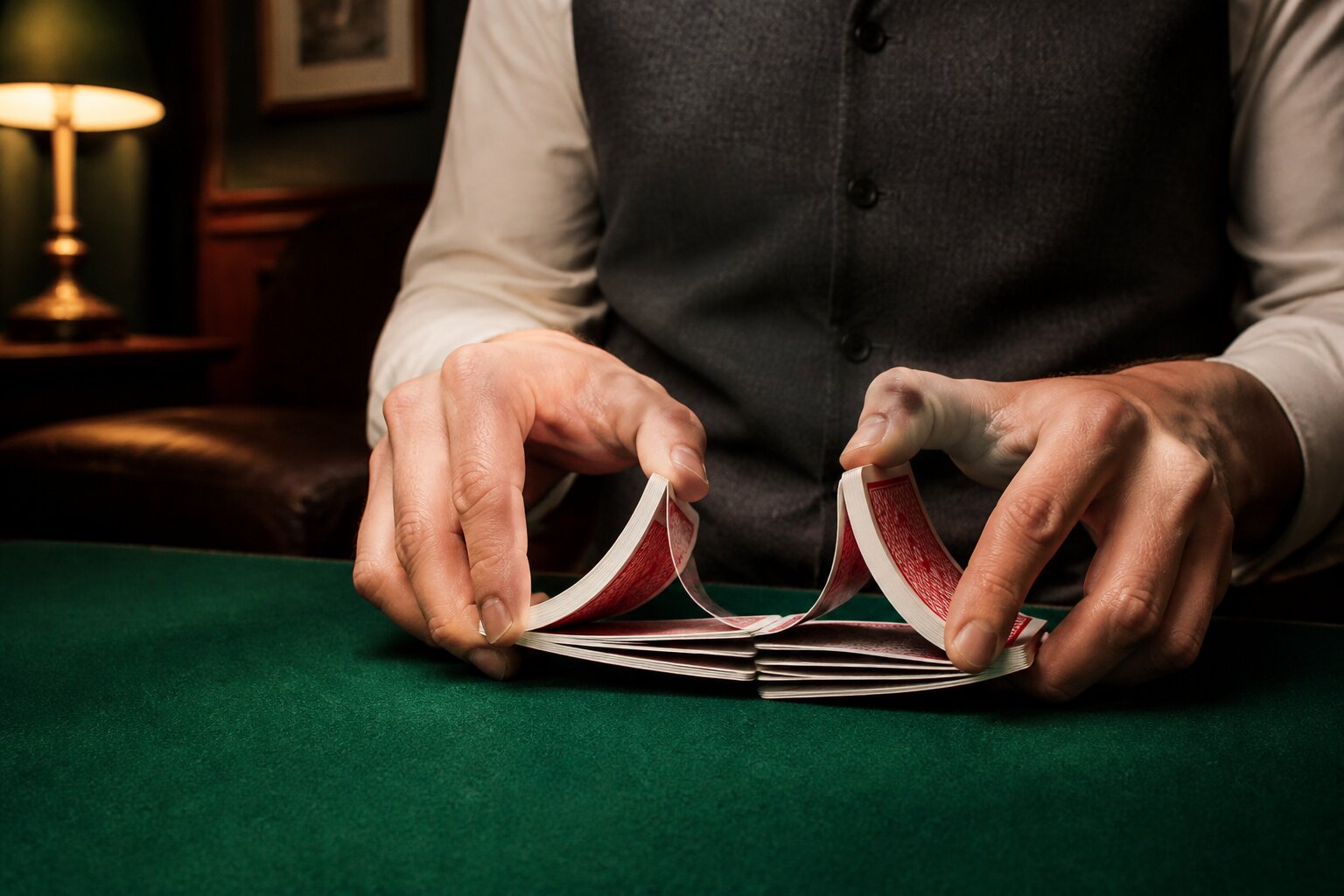
Ever watched someone shuffle a deck of cards and wondered how they do it with such flair? Whether it’s a family game night, a casual poker evening with mates, or a friendly round of blackjack, a good shuffle keeps things fair and can add a bit of showmanship.
Shuffling isn’t just about mixing the cards; it’s about making sure every player gets a fair go. Neatly stacked decks or obvious patterns can spoil the fun and make outcomes predictable, and nobody wants a game decided by remembered sequences or visible cards.
There are lots of ways people shuffle, from the classic overhand to the riffle with a bridge finish or the quick Hindu shuffle. Read on to learn how each method works and which one suits different situations.
Why Is Shuffling Cards Important?
Shuffling is central to fair play. In games such as poker or blackjack, thorough mixing reduces predictable patterns and prevents anyone from gaining an unfair advantage by recalling card order.
If cards remain in noticeable groups or only small parts of the deck move, familiar combinations can keep appearing and the game stops being an even contest. Proper shuffling restores randomness across the deck so every hand is dealt from a well-mixed pack.
Beyond fairness, a clear, careful shuffle helps avoid disputes at the table and builds trust among players. It’s a small part of good conduct that supports consistent, transparent play and sensible, compliant behaviour.
Most Popular Methods to Shuffle Cards
Different shuffles suit different needs. The overhand shuffle is gentle and common in casual play; the riffle shuffle gives a deep mix and looks professional; the Hindu shuffle is quick and continuous. Each technique places cards through distinct movements that change how thoroughly the deck is broken up, so picking the right one depends on the game and how formal the setting is.
Below, you'll find clear descriptions of these three methods, followed by practical guidance on performing them so you can decide which fits your next game. If you want to actually get the feel for each method, the next section explains how they are carried out.
How Does the Overhand Shuffle Work?
The overhand shuffle is simple and places small packets of cards one after the other into your hand. Holding the deck vertically, the top portion is drawn off in short batches and allowed to fall back so they stack in a different order. This movement gradually mixes the deck and is gentle on card edges, making it popular for games where a quick, casual shuffle is appropriate.
Doing several repetitions of the overhand action increases mixing; using varied packet sizes helps ensure individual cards move more frequently and the deck becomes less patterned.
What Is the Riffle Shuffle?
The riffle shuffle involves splitting the deck into two roughly equal halves and interleaving the cards so they alternate between the two piles. Thumbs release the cards to create a light, interwoven cascade and, when combined with a bridge finish, the cards spring into a neat, compact pile. This method tends to be more effective at randomising the deck than a few overhand shuffles and is often used when a deeper mix is needed.
The bridge finish bends the halves slightly before releasing them so the cards slot together more smoothly; practising the tension and release makes the finish look clean while preserving the cards' shape.
What Is the Hindu Shuffle?
The Hindu shuffle transfers small packets from one end of the deck into the other hand repeatedly, effectively reversing the deck in short bursts. It’s performed with the deck held lengthwise and uses quick, rhythmic motions to move groups of cards across. The Hindu shuffle is fast and often used when speed is desirable without excessive handling, and repeating the motion several times helps distribute cards across the pack.
It’s particularly useful when you want a compact, continuous shuffle that doesn’t require a pause to split the deck.
Step-by-Step Guide to Shuffling Cards
This section describes how to perform each shuffle so you can get the feel for the movements and how they change the deck. Rather than isolated commands, these explanations follow the natural sequence of each technique so the process reads as a simple, learnable flow.
Overhand Shuffle
Start with the deck in one hand, held vertically between thumb and fingers. With the other hand, pull off small groups from the top and let them fall back into your palm so they rest in a different order. The rhythm comes from alternating packet sizes and repeating the action until the deck no longer shows large blocks of unmoved cards. Overhand shuffles are forgiving: they won’t strain the cards and are easy to adapt to lighter or tighter grips depending on how thorough a mix you need.
Riffle Shuffle
Begin by splitting the deck into two halves and holding each in one hand with the short ends pointing towards each other. Use the thumbs to release cards from the inner edges so they interleave as they fall. Once the cards are interwoven, bring the halves together and, if desired, apply a gentle bend to the joined pile so the cards bridge and spring into a compact stack. Practising the timing of the thumb release and the bridge tension helps make the riffle both effective and smooth while keeping the cards in good condition.
Hindu Shuffle
Hold the full deck lengthwise in one hand and use the other to pull off small packets from the top, dropping them into the receiving hand. The process continues in quick succession until the full deck has been transferred. Reassembling and repeating the motion a few times breaks up sequences and spreads cards through the pack without heavy handling. The Hindu shuffle’s strength lies in its speed and steady, repetitive transfer of cards.
Each technique alters the deck differently; combining a couple of methods in succession often produces the best overall mix. Next, common mistakes show what to avoid so those techniques work as intended.
Common Mistakes to Avoid When Shuffling
A few easy-to-make habits can undermine shuffling. One is exposing card faces while moving packets; even a brief glimpse can reveal information and break the trust of the table. Keep hands positioned to shield faces during all movements so no inadvertent glimpses occur.
Another frequent issue is inadequate mixing. Relying on one quick shake or only partial transfers can leave blocks of cards unchanged and preserve patterns. Allow enough repetitions and vary packet sizes so the cards circulate through the deck rather than staying clumped.
Overhandling that bends or creases cards also causes problems. Forced riffles or overly tight bridges can warp cards or mark edges, which then become identifiable. Handle the deck with a relaxed grip and stop using a pack that shows wear, because visible defects erode fairness.
With those pitfalls avoided, taking care of the deck itself extends both its life and its integrity at play.
How to Keep Your Cards in Good Condition
Storing cards properly and handling them with clean, dry hands keeps games fair and makes shuffling easier. A sturdy box or tin protects the pack from bends and knocks, while keeping it away from liquids and food prevents stains and sticky surfaces.
If cards pick up grime, a dry soft cloth will usually lift dust and oils; for plastic-coated cards, a lightly damp cloth can remove tougher marks, but drying each card fully is essential before returning the deck to its case. Replace a deck when cards become warped, creased, or noticeably different in texture to avoid giving anyone an unintentional edge.
Good maintenance means shuffles remain reliable and the game stays focused on fair play. Whether using overhand, riffle or Hindu techniques, looking after the pack ensures every deal starts from the same clean baseline and keeps play straightforward and trustworthy.
Enjoy Casino Games at Slots UK
We’d love to welcome you to our site where you can experience the fun and excitement of casino games with us at Slots UK. Our aim is to make your visit enjoyable every step of the way.
Getting going is straightforward: just create an account, make a deposit and you can start playing your chosen favourites. We look forward to seeing you on-site soon.
**The information provided in this blog is intended for educational purposes and should not be construed as betting advice or a guarantee of success. Always gamble responsibly.