
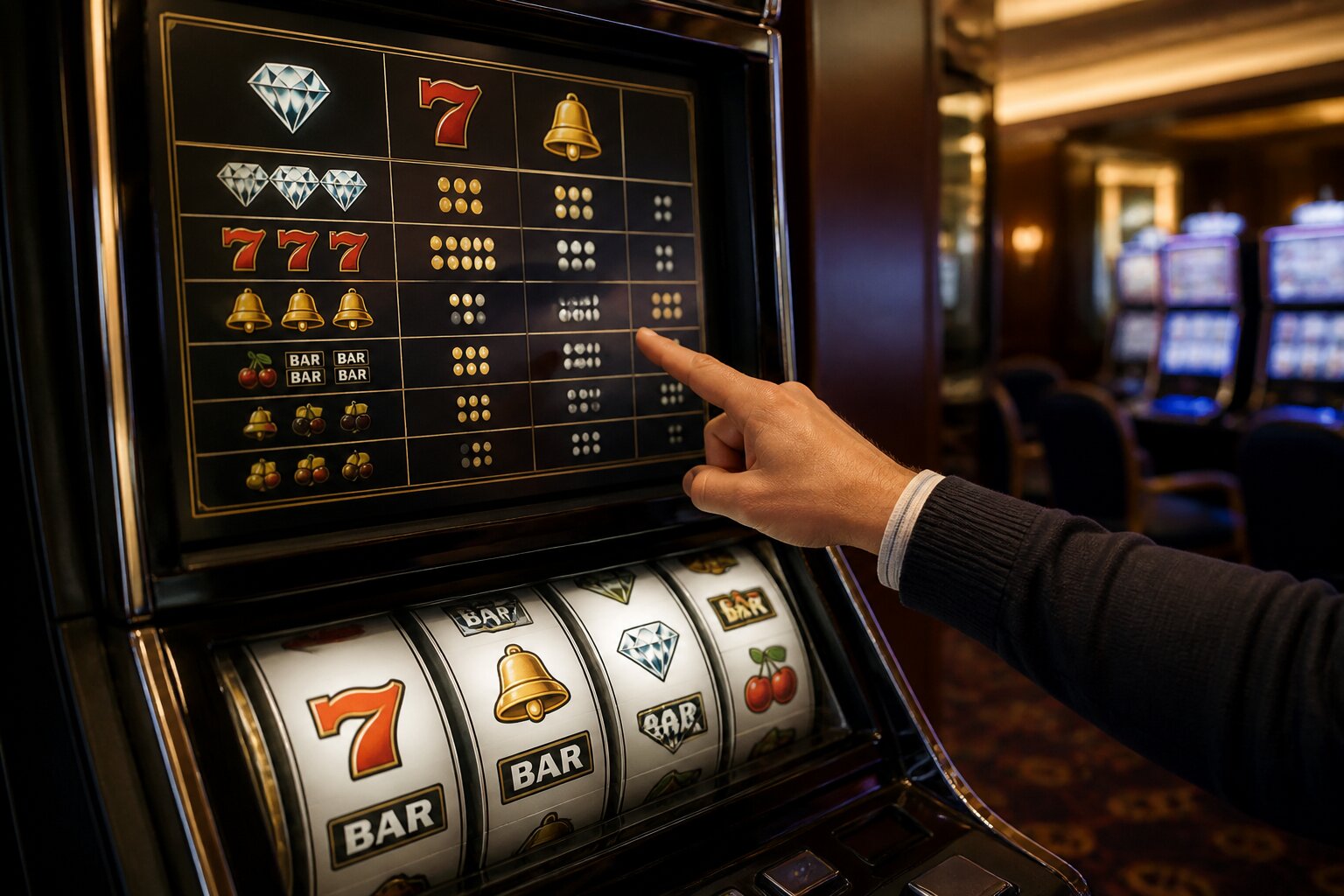
Ever wondered why some slot games seem to pay out for what looks like a random set of symbols, while others leave you empty-handed despite landing a long string of lemons or cherries? The answer lies in something behind every spin: the pay table.
This panel tells you what each combination is worth in pounds and pence and what special symbols do. For many players it can look like a jumble of numbers, icons and jargon, but learning to read it makes the game far clearer.
Before pressing the spin button again, give that information panel a second glance — understanding what’s written there is the first step to better-informed play.
What Is a Slot Machine Pay Table?
A slot machine pay table is the game’s payout guide: a chart or information panel that shows how much each symbol combination pays and how special features work. Whether on a physical machine or on a screen, it’s the reference that explains which symbols are valuable, which act as substitutes, and which trigger extras.
Pay tables list every symbol, often from highest value to lowest, and show payouts for typical combinations — for example, three, four or five of a kind. They also describe wilds (which substitute for other symbols), scatters (which may pay from any position), and any bonus features that change normal play.
A pay table describes possible outcomes rather than predicting what will happen on a particular spin. Slots use regulated random number generators to determine each result independently; the pay table simply tells you what prizes are available when certain symbols line up. With that context, the next step is to learn how to read one so you can spot those prizes quickly.
How to Read a Pay Table
Opening the pay table is usually done by tapping an information icon on-screen or pressing a Help or Info button on a cabinet. Once it’s visible, focus on a few key parts.
Start with the symbol list: these are normally ordered from the highest-value symbols at the top to the low-value ones at the bottom. Beside each symbol you’ll see payout amounts for different matches, for instance what three, four or five in a row will pay. Some games also reward two-in-a-row wins.
Look next at bet-size notes. Pay tables may show prize amounts based on the current wager, the minimum bet or a bet-per-line basis. If the amounts are tied to stake levels, increasing your wager raises the payouts shown, though it does not change the underlying chance of each outcome.
Paylines are explained either by diagrams or by a list. These show which patterns across the reels count for wins — straight lines, diagonals or more complex shapes — and how many paylines the game uses. Finally, check the descriptions of wilds, scatters and any bonus features so you know what to watch for during play. These elements together reveal how combinations turn into payouts and extras.
Next, we’ll look at the core pay table sections and what each one means for play.
Key Features Found on Pay Tables
A pay table does more than list prize amounts; it breaks the slot down into its main parts so you can see how the reels, symbols and special functions interact during a session. Each section focuses on a different aspect of play and explains the effects you can expect from the reels.
Symbols and Their Values
Symbols form the basis for every payout and the pay table shows each one with the amounts paid for matching two, three, four or five of a kind. Typical entries might be presented like this:
Gold Bar: £10 for 5, £5 for 4, £2 for 3
Lucky 7: £5 for 5, £2.50 for 4, £1 for 3
Plum: £2 for 5, £1 for 4, 50p for 3
10, J, Q, K, A: Lower-value symbols, often paying from 20p to £1 depending on how many land in a row
Some symbols perform extra roles: wilds substitute for other symbols to complete combinations and scatters may pay from any reel position. The pay table will state which symbols perform these functions and any limits or multipliers that apply.
Paylines and Winning Combinations
Paylines are the patterns that define a winning combination. The pay table explains how many paylines the game uses and illustrates the routes across the reels that count for wins. For instance, a 20-payline slot might show lines that run straight, zig-zag or diagonally across the reels.
A win typically requires matching symbols to appear on a payline and, in many games, to start on the leftmost reel. The pay table clarifies whether wins pay only on the highest line per spin or if multiple wins can pay simultaneously, and how overlapping combinations are handled.
Bonus Rounds and Special Features
Modern slots often include features that change the usual symbol-match payouts. The pay table outlines these extras, how they trigger and what they do. Examples include:
Free spins: Triggered by landing a required number of scatter symbols, awarding a set number of spins with the same stake.
Bonus games: Mini-games activated by specific symbols or combinations, offering alternative ways to win.
Expanding wilds: Wild symbols that cover more than one position on a reel, increasing the chance of forming combinations.
Each feature entry will explain activation conditions, any modifiers such as multipliers, and whether the feature can retrigger. Knowing these details helps set expectations for the variety and timing of rewards a game can offer.
Differences Between Online and Land-Based Slot Pay Tables
Pay tables serve the same purpose across machine types, but presentation differs with the medium. In a land-based machine the pay table is often printed or shown on a small screen and tends to be concise because of limited space. It covers symbol payouts, basic feature summaries and a brief illustration of paylines.
Online pay tables can be more detailed and interactive. Digital pop-ups allow multiple pages with animated diagrams, short clips of bonus features in action, and extended explanations of bet-level impacts and special rules. Where online versions display bet-based prize tables, they often let players change stake levels in the same view so it’s clear how payouts scale.
Both formats aim to give the same essential information; the online presentation typically makes that information easier to explore and cross-check. Understanding these differences helps when switching between physical machines and digital games. This context leads naturally into why paying attention to the pay table matters for gameplay choices.
Why Pay Tables Matter for Your Gameplay
Knowing a pay table lets a player see exactly what a slot offers and sets realistic expectations. When the top prize or the values for special features are clearly displayed, it’s straightforward to judge whether a game matches a preferred style of play — whether that’s chasing larger, less frequent prizes or favouring smaller, more regular payouts.
The pay table also reveals features that affect session dynamics, such as whether multipliers are available during free spins or whether bonus features involve decision-based mini-games. These details influence how a session feels and what kinds of outcomes are possible.
Importantly, reading the pay table is part of informed play. Being aware of what a game can and cannot do helps people make considered choices about stakes and session length and supports responsible engagement with gaming activities.
Common Myths About Slot Pay Tables Debunked
Myth: Knowing the pay table means you can beat the slot.
A pay table explains possible payouts and features; it does not change or predict the outcome of a spin.
Myth: Pay tables show when a slot is due or hot.
There’s no mechanism in the pay table that indicates timing or sequencing of wins; results are determined independently each spin.
Myth: Bigger numbers on the pay table mean better chances of winning.
Higher listed prizes are often rarer; the size of a payout does not make it more likely.
Myth: Lots of features on the pay table means frequent bonuses.
A feature’s presence only describes what can occur, not how often it will happen.
Myth: Increasing your bet alters the odds shown on the pay table.
Changing a stake typically scales payouts but does not alter the chance of symbol combinations appearing.
These clarifications should help make pay tables feel less mysterious and more like practical guides to a game’s mechanics, setting the stage for clearer expectations when you next check a game's information panel.
Play Online Slots at Slots UK
We invite you to explore the variety and enjoyment our site has to offer, with plenty of different options to suit all preferences. There is something for everyone to discover and enjoy with us.
Getting started is straightforward: simply create an account, make a deposit and you can begin exploring all we have to offer. We look forward to welcoming you at Slots UK.
**The information provided in this blog is intended for educational purposes and should not be construed as betting advice or a guarantee of success. Always gamble responsibly.