
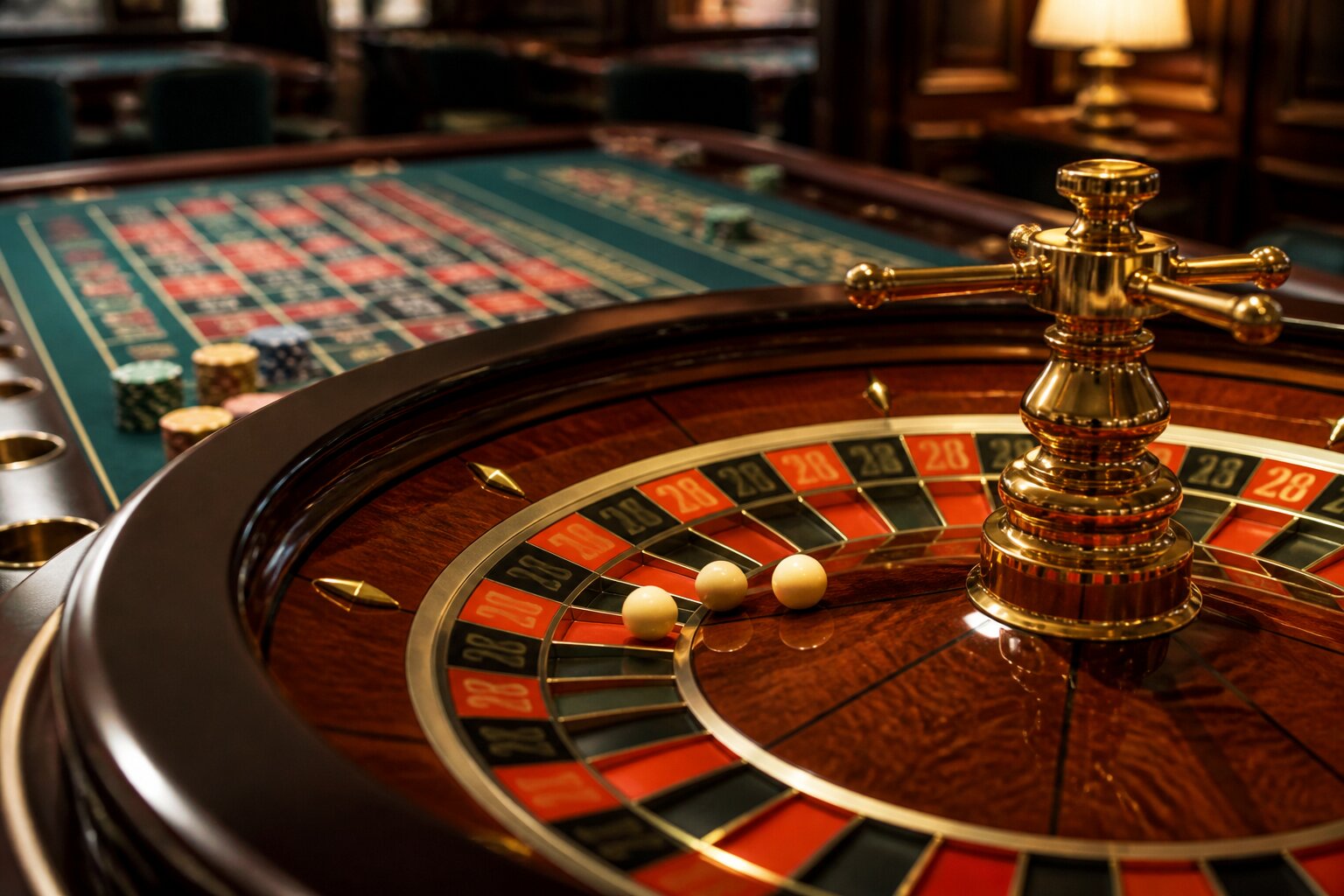
If you’ve ever settled behind a roulette table, chips in hand, watching the ball circle the pockets, you know the pull of the game. Double Ball Roulette adds a clear twist: two balls spin around the wheel at once. That change reshapes the way results appear and how bets pay out.
This article explains what Double Ball Roulette is, how it differs from the classic European-style game, how play feels at the table, and where you can try both versions online in the UK. Read on to decide which variant might suit your preferences.
What Is Double Ball Roulette?
Double Ball Roulette is a modern variant of European roulette that uses two balls launched onto the wheel in the same spin. They usually travel in opposite directions and can land in two different pockets, so each round can produce two distinct winning numbers. The table layout and most standard bets look familiar, but there are additional wagers tied specifically to the double-ball outcomes, such as bets that both balls land on the same number or both land on the same colour.
Payouts are adjusted to reflect the extra ball and the wider range of possible outcomes. Some bets become easier to hit and therefore pay less; others that depend on both balls matching are much harder to achieve and reward more. The game first appeared in land-based casinos and then moved online; it is now offered in live and, more rarely, automated formats. Play is conducted under regulated conditions and outcomes are determined by the wheel and balls, not by player action.
With that outline in place, the next section compares the most important differences you will notice at the table and in payout structure.
Key Differences Between Double Ball & Regular Roulette
Double Ball Roulette keeps the familiar European wheel of 37 pockets, numbered 0 to 36, but replaces the single ball with two. This change produces a different set of possible results each spin and introduces specialised bets alongside the classic inside and outside wagers. The mechanics of launching two balls and settling outcomes are the most obvious differences, but the effect goes deeper: the presence of a second ball alters the odds for many bets and leads casinos to adjust payouts accordingly.
Below are the main areas where the games diverge, each explained so you can see the practical impact on play.
How Do the Rules & Table Layouts Differ?
The physical layout of the betting table is largely the same as European roulette, so experienced players recognise where to place inside bets on specific numbers and outside bets such as red or odd. Double Ball Roulette adds extra betting options for outcomes that require both balls to behave in a particular way. For example, there are wagers on both balls landing on the same number, or both being the same colour.
Betting windows and chip handling work the same as in classic roulette: players place chips before the spin, the dealer or automated system closes betting, and outcomes are settled according to the declared results. Operators present the special Double Ball bets alongside standard choices, with clear rules and displayed odds so players can compare them at a glance. This combination of familiarity and additional options is part of the game’s appeal.
What Payouts Can Players Expect in Each Variant?
Payouts in Double Ball Roulette are adjusted because the second ball changes the ranges of possible wins. In classic European roulette a straight-up single number win traditionally pays 35 to 1, while even-money bets such as red/black or odd/even pay 1 to 1. With two balls, the chance of at least one ball matching a selected number rises, so the single-number payout in Double Ball play is often around 17 to 1 to reflect that increased probability.
Special bets that require both balls to land on the same single number are far less likely and therefore carry very large payouts, often expressed in the thousands to one. Other adjusted markets include "either ball" outcomes, where a bet pays if at least one ball meets the condition, and "both balls" outcomes, where both must. Casinos set these payouts to balance the higher frequency of some wins against the rarity of others, while keeping an overall house margin that complies with regulatory standards.
Next, we look at how these differences change the feel of a game session and what it means for the player experience.
How Does Gameplay Compare?
Both games follow the same basic rhythm of accepting bets, spinning the wheel, and settling results, but Double Ball Roulette alters the emotional tempo by revealing two outcomes instead of one. That creates more immediate action each spin, and players often place a broader mix of bets to reflect the extra possibilities. The gameplay becomes more dynamic, with rounds that can produce splits, pairs, or entirely separate results for the two balls.
Players who enjoy tracking multiple outcomes or who like the variety of new bet types may prefer this livelier feel. Those who favour a steadier pace and the classic suspense of a single result may find the traditional game more suited to their preferences. Either way, both formats use the same basic structure of wheel, numbers and bets, so switching between them is straightforward.
How Does Dealing & Betting Work in Double Ball Roulette?
Dealing in Double Ball Roulette involves launching two balls onto the spinning wheel, typically in opposite directions. Players place bets before the spin, choosing from standard inside and outside bets as well as the special double-ball markets. After the balls come to rest in two pockets, each outcome is checked individually and bets are settled according to the rules on the table layout.
For example, a player might stake on the single number 26, on red, and on a "both balls same number" market. If one ball lands on 26 the single-number bet pays at the adjusted rate for the double-ball game. If both balls are red and a "both balls on red" wager was placed, that bet pays at its specified larger odd. Dealers and software follow the published procedures for checking pockets and distributing winnings to ensure consistency and transparency.
Are the Odds Different in Double Ball Roulette?
Yes. With two balls, the probability of at least one ball matching a simple condition roughly doubles for many bets, which is why some payouts are reduced compared with single-ball roulette. For instance, the chance of a straight-up hit on a particular number moves from roughly 1 in 37 to approximately 2 in 37 for at least one ball, which explains the drop from 35 to 1 down to roughly 17 to 1 on that bet. Conversely, the probability of both balls landing on the same chosen number is extremely small and carries a far larger payout to match the true odds.
Outside bets also change in character: wagering that at least one ball will be red is easier to achieve than both balls being red, and the two markets will pay very differently to reflect that. Operators are obliged to present these odds clearly so players can understand the risk–reward trade-offs before placing bets.
Now that you have a sense of how play and odds shift, the next section helps you decide which version might suit your taste.
Which Variant Offers a Better Experience?
The choice between Double Ball and regular roulette depends largely on personal taste. Classic roulette delivers a familiar, steady experience with straightforward bets and a single suspenseful reveal each spin. It suits players who like a clear, measured format.
Double Ball Roulette offers a more animated session. Every spin produces two results, creating more betting permutations and moments of surprise. This can be appealing to players who enjoy variety and the option to place layered bets that engage with both outcomes.
Consider how much complexity you prefer in a single round and whether you enjoy tracking multiple results. Social players who like a brisk tempo may lean toward Double Ball, while those who prefer a slower, focused game may stick with the single-ball tradition. Either way, the most important factor is choosing whichever you find most enjoyable while staying within personal limits and available safeguards.
With experience of both game styles, many players develop a clear preference, which is easy to explore online where both formats are offered under regulated conditions.
Can You Play Both Versions Online in the UK?
Yes. Both Double Ball Roulette and standard European or French roulette are available online in the UK in live dealer and automated formats. Licensed operators must follow UK regulatory requirements that promote player protection, transparent information, and accessible safety tools. Games typically stream from professional studios or run on certified random number generators for automated play, and they display odds and payout rules for each market so players know what they are betting on.
Double Ball variants are less numerous than classic tables but are offered by several live-game providers and by some automated platforms. Betting limits, table styles and the presence of special double-ball bets vary between sites, so players can choose the environment that matches their preferred stakes and pace. All platforms operating legally in the UK provide staking controls, account self-exclusion options and other responsible gambling tools to help players maintain control.
Whether you try a live table or an automated version, checking the displayed odds and table rules will make clear how the double-ball markets differ from the single-ball equivalents. With that information, players can pick the version that best fits their style and play responsibly within the safeguards available.
Play Casino Games at Slots UK
We welcome you to explore our collection of casino games and play with us whenever it suits you. Enjoy the experience at your own pace in a friendly and inviting setting.
Getting started is easy: create your account, make a deposit and choose what you would like to play. We look forward to having you with us.
**The information provided in this blog is intended for educational purposes and should not be construed as betting advice or a guarantee of success. Always gamble responsibly.